
NV Boiler Service

What size boiler a Nevada home needs

One request and the search for a pro is handled.

Let a pro reach out

There's no boiler size that fits every house in Nevada. The right size comes from a heat loss calculation, a room-by-room look at your square footage, your windows, your insulation, and your ceiling height, done by whoever installs it. A boiler sized off square footage alone, or matched to the one you're replacing, is often wrong in a home like yours. Too big and it short-cycles, turning on and off instead of running steady, which wears out the burner and the parts faster. Too small and it runs constantly through the cold snaps without getting your home up to temperature. Most homes here heat with gas, so this is a one-time decision that stays with the house for years. The number that matters isn't a size you can look up. It's the one a contractor works out from your actual home.

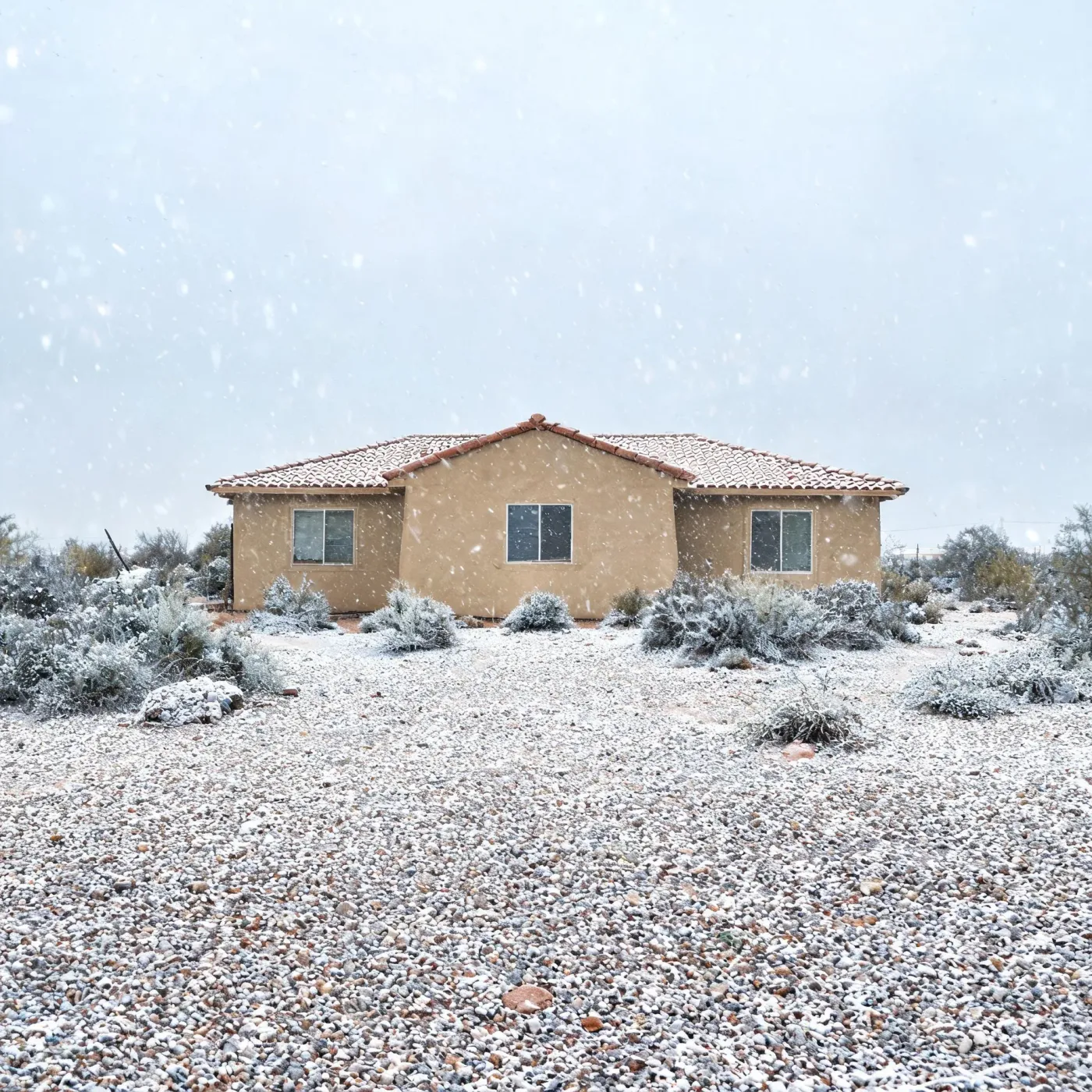
A single-story tan stucco house with a tile roof stands behind snow-dusted desert shrubs and a gravel yard during falling snow.

Winter nights average 33°F across Nevada, according to NOAA climate data. That's mild compared to most of the country, and it matters for sizing. A boiler built for a Minnesota winter is more than your house here will ever ask for. Oversize it anyway and it short cycles, firing on and off instead of running a steady, even burn, which wears the heat exchanger faster and leaves some rooms warmer than others. The right size runs longer stretches at lower output, which is both gentler on the boiler and quieter at night. Since most homes here heat with gas and power is cheap, there's no cost reason to oversize for backup either. The calculation should reflect what your nights actually look like here, not a colder climate's winter.

NOAA nClimDiv 1991-2020 county normals weighted by homes

How does a contractor figure out what size boiler I need?

You want to know what the contractor is actually going to do when they come out, not just the term for it. A mild Nevada winter already tells you the house won't need as much boiler as a cold-climate home, but you want to know how someone turns that into an actual number for your house specifically.

A Manual J heat loss calculation, room by room

A contractor measures every room, checks the windows and doors, notes how much insulation is in the attic and walls, and figures out how fast each room loses heat on a cold night. That gets added up into a total heat loss number for the house, measured in BTUs per hour. The boiler gets sized to match that number, not the square footage alone. Two houses the same size in the same Nevada neighborhood can need different boilers if one has more windows facing north or less insulation in the attic. This is why a contractor walks the house instead of asking for the square footage over the phone and quoting a size from that.

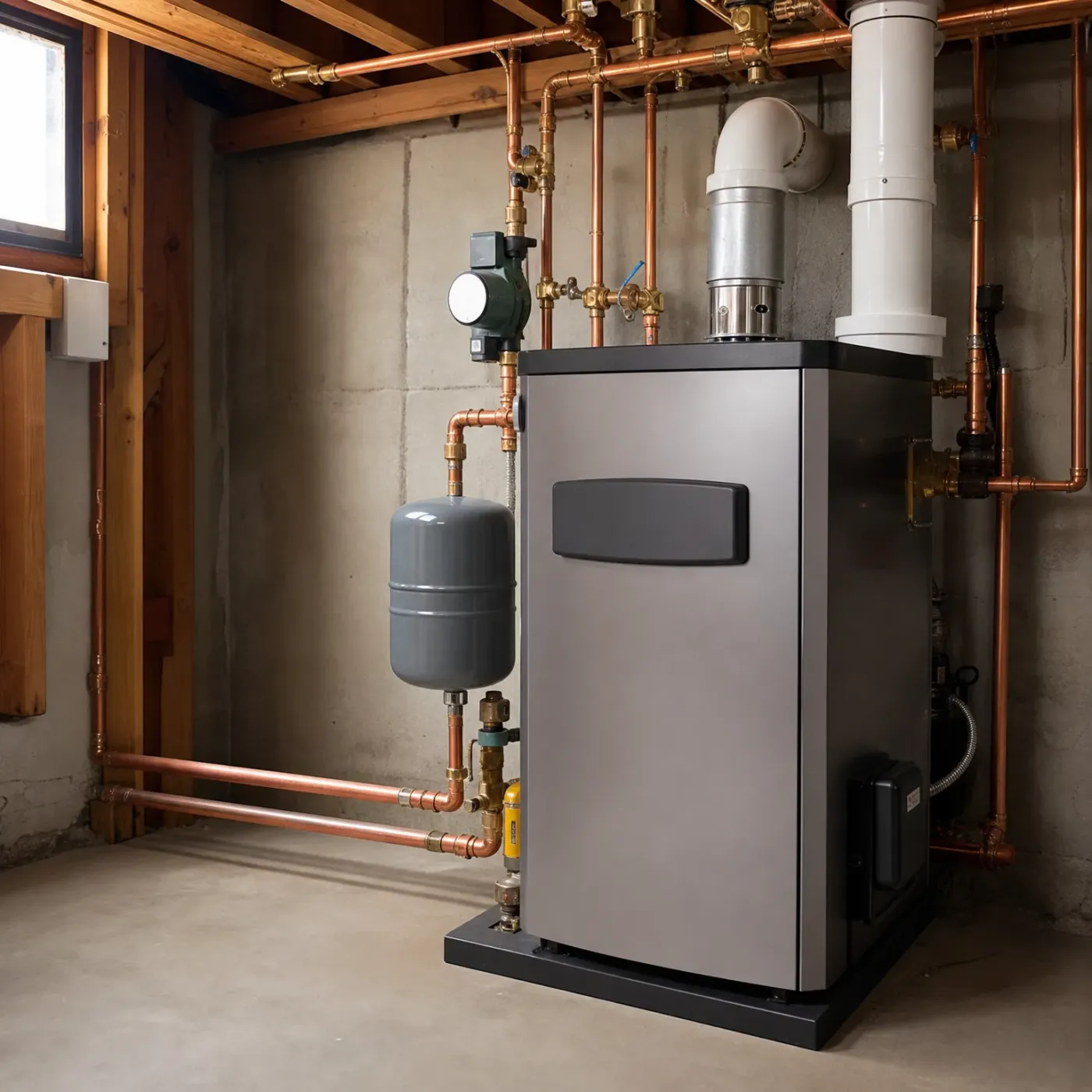
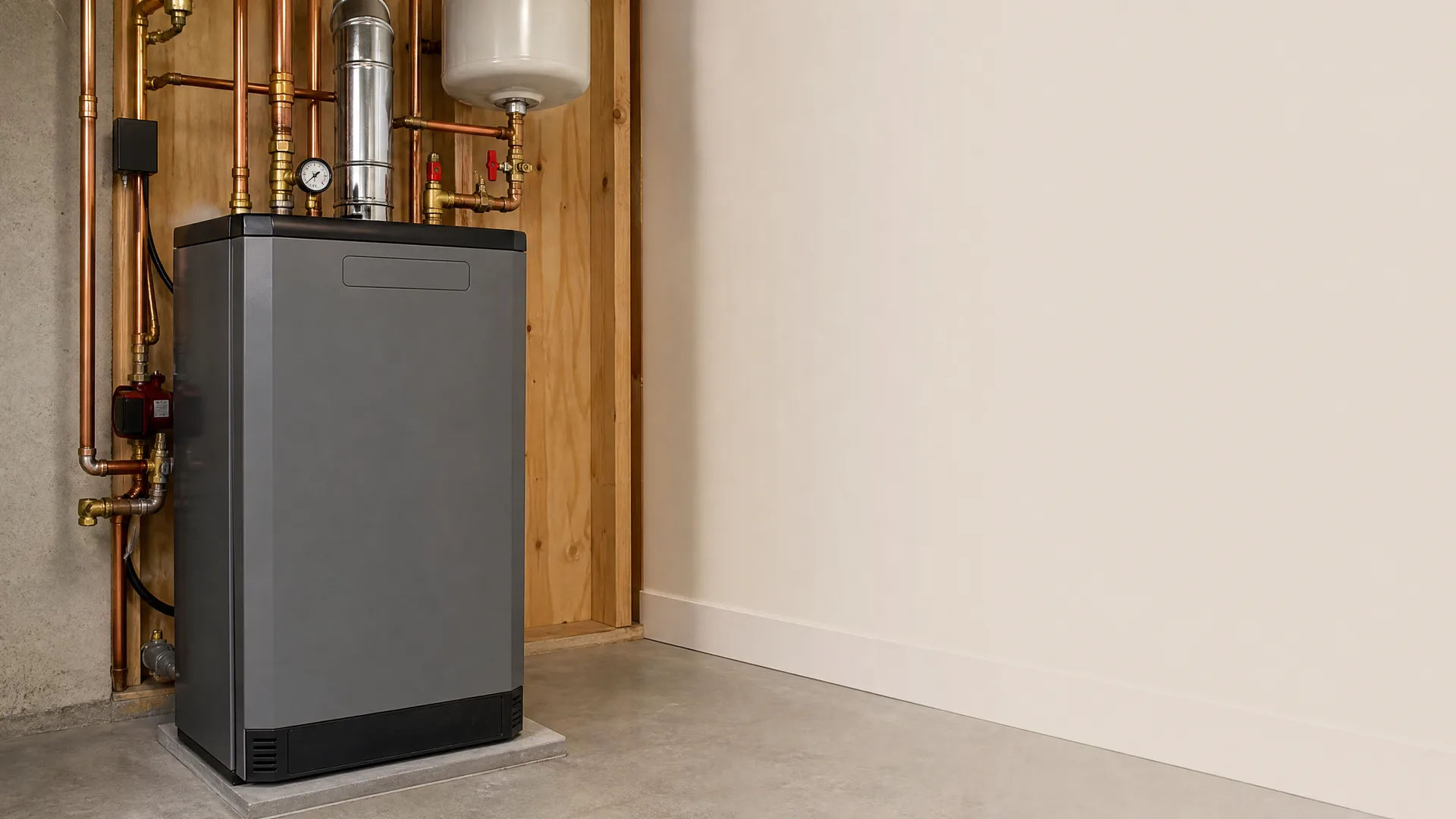
A dark grey floor-standing boiler on a concrete floor in front of a plywood wall, with copper pipes, valves, a pressure gauge, a flue pipe and a white expansion tank above it, beside a plain light-coloured wall.

Boiler sized too big

An oversized boiler reaches the temperature you set and shuts off fast, then starts again a short while later. That's called short cycling, and it wears on the igniter and the ignition system faster than steady runtime would. You'll also notice rooms heat unevenly, warm in bursts rather than holding steady, because the boiler never runs long enough to even things out through the pipes or radiators.

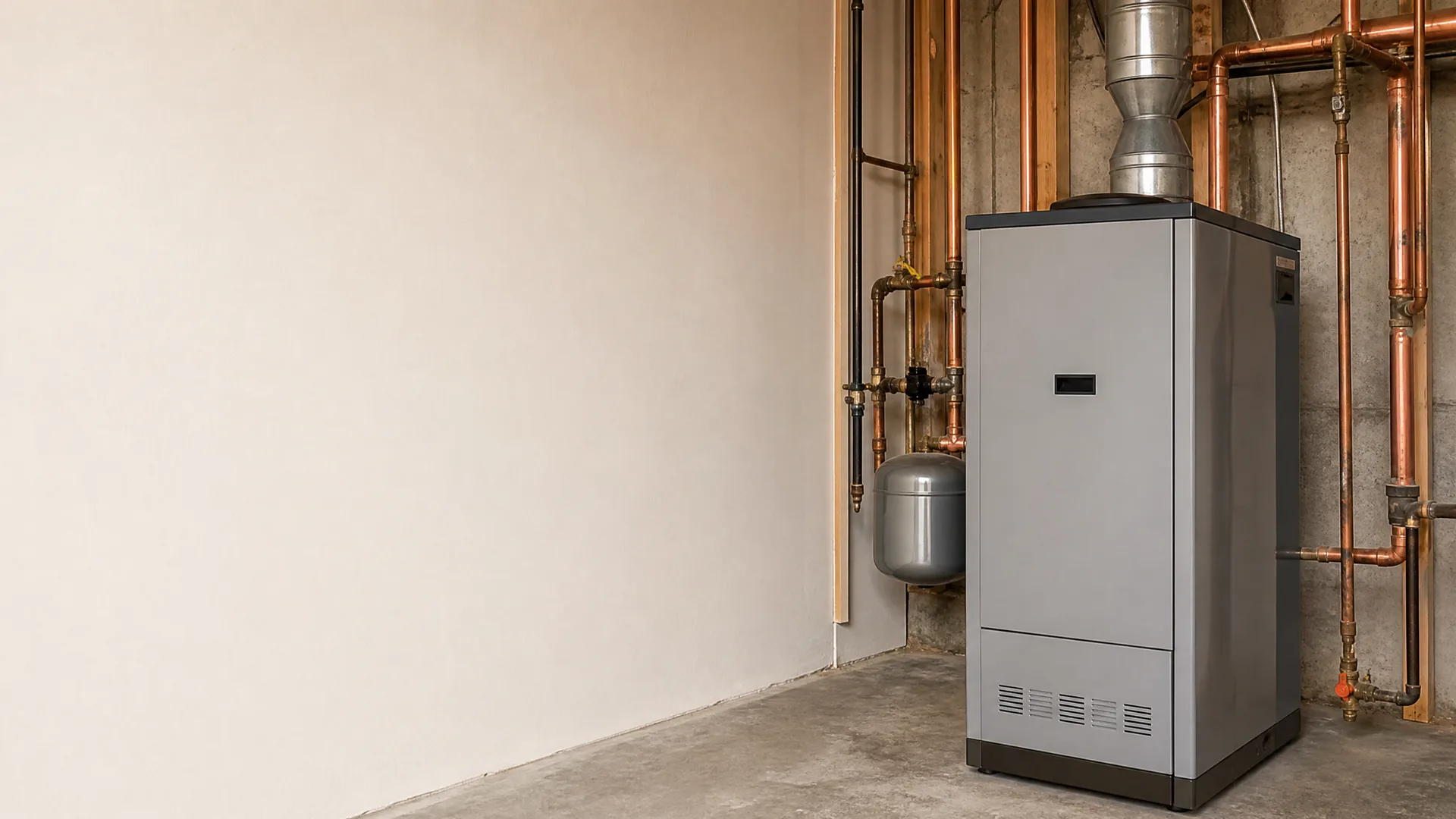
A gray boiler unit with a metal flue pipe stands in a basement corner, surrounded by copper piping and an expansion tank against a plain light wall and concrete floor.

Boiler sized right

A correctly sized boiler runs longer at a lower output, which is what keeps a home evenly warm through a Nevada night in the 30s. Longer, steady cycles put less wear on the parts that start and stop the burner. It also means the boiler was matched to what your house actually loses in heat, not to a number pulled from square footage alone, which is what the heat loss calculation is for.

Oversized vs. Properly Sized Boiler

Oversized boiler

  • Costs more to install upfront since boiler price climbs with output, and Nevada winters rarely call for that much capacity.
  • Short cycles on mild nights, which here means most of the winter, since 33°F average lows don't demand long runtimes.
  • Puts more wear on the igniter and ignition system from the extra start-stop cycles than steady runtime would.
  • Runs less efficiently overall, because a boiler cycling on and off never settles into its most efficient stretch of operation.
  • Takes up more space in the mechanical room or closet than the output your house actually needs calls for.

Properly sized boiler

  • Matches output to what a heat loss calculation says your house loses on a cold Nevada night, not a guess based on square footage alone.
  • Runs longer, steadier cycles that hold a more even temperature room to room.
  • Puts less strain on the igniter and ignition system since it isn't starting and stopping as often.
  • Costs less to install than an oversized unit, since you're not paying for output the house will never use.
  • Holds up longer because it's running the way it was built to, not constantly cycling against its own capacity.
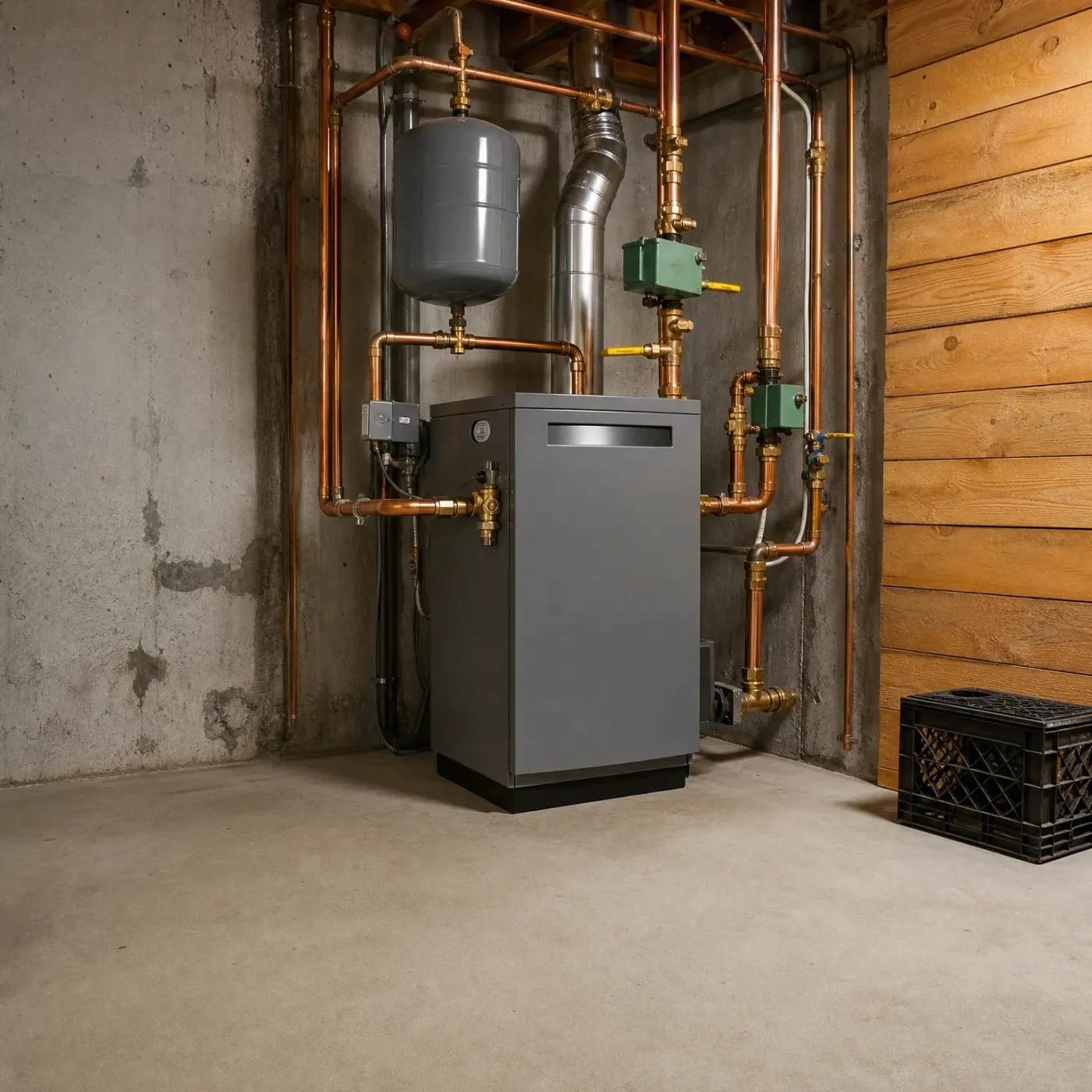
A gray boiler unit in a basement corner with copper piping, brass valves, a gray expansion tank, a metal flue duct, concrete walls and a wood-paneled wall, with a black plastic crate on the floor at right.

Boiler running right

This is a boiler sized to the house, with the piping and zone valves set up to match the heat loss calculation. It runs long, steady cycles and holds the temperature without straining the igniter. Everything here, the expansion tank, the zone controls, matches what the rooms actually call for.
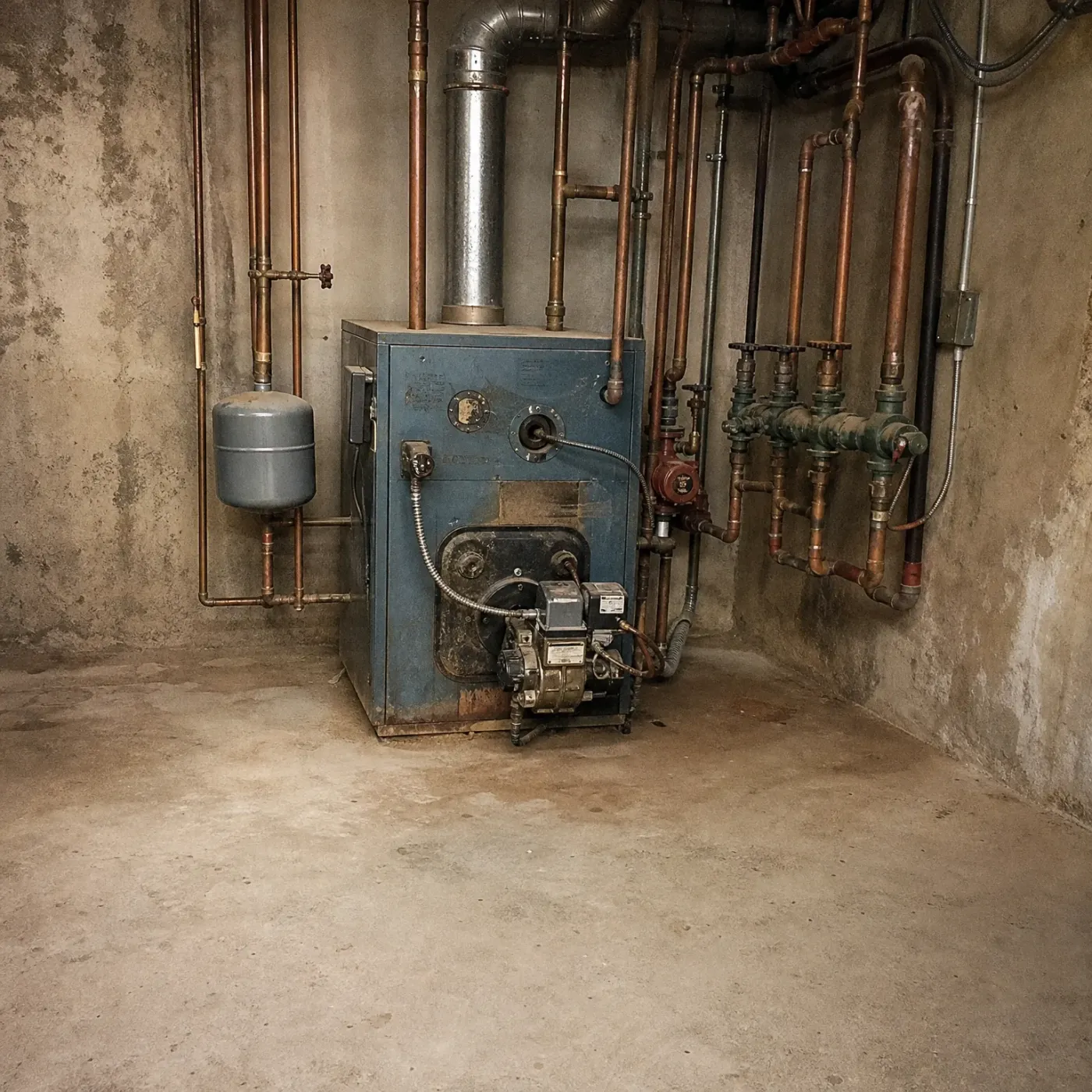

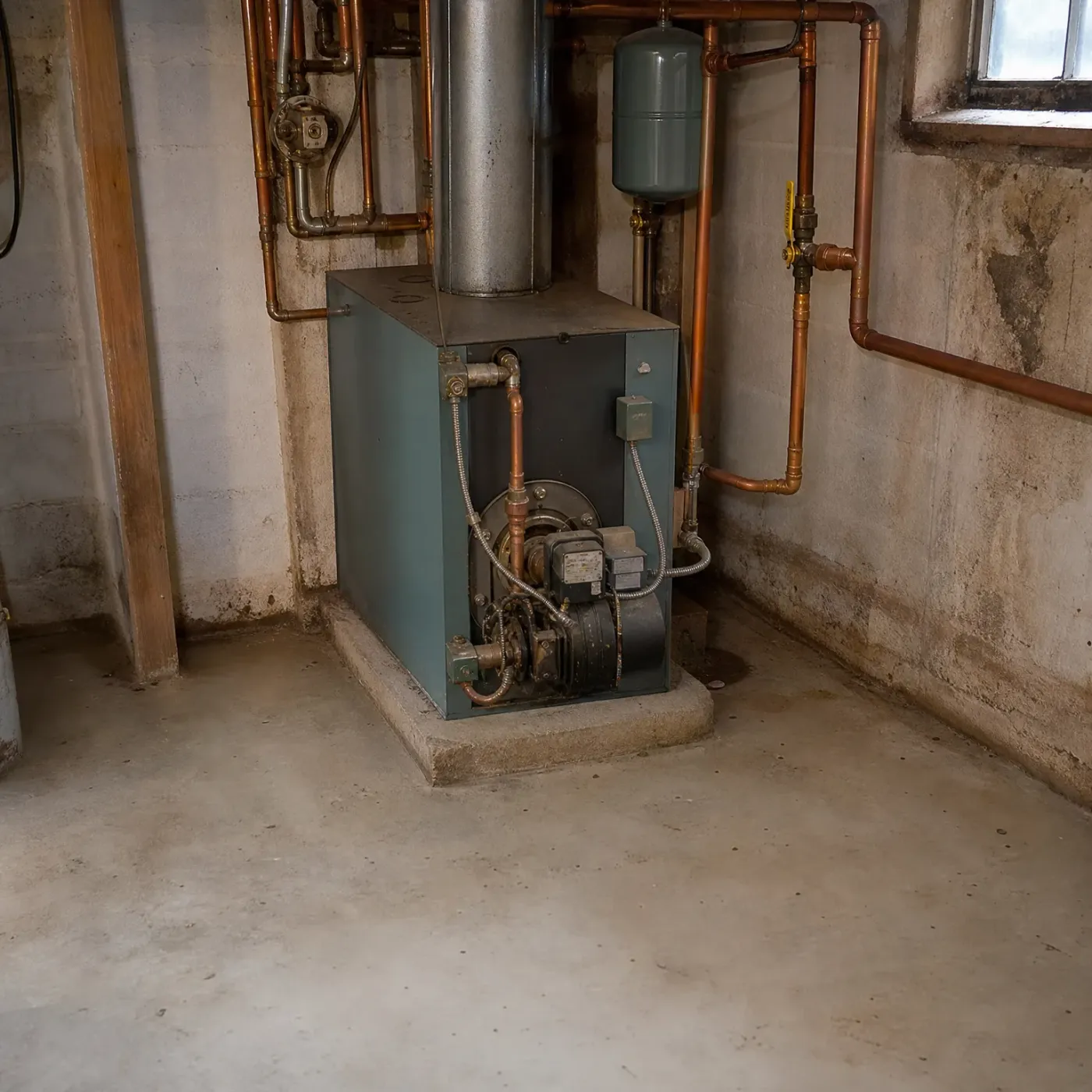
An older blue boiler with a burner unit stands in a concrete basement corner, connected to copper and steel piping, valves and a gray expansion tank on the wall.

Boiler under strain

This older unit shows what happens when sizing or upkeep falls behind. The piping and zone valves are original, and a boiler this age may no longer match what the house needs. If yours looks like this, a replacement is the time to get the size right from the start.

A smiling man in a dark navy sweater sits on a light sofa in a living room, with a glass bowl of popcorn on a wooden coffee table and bookshelves behind him.
A smiling man in a dark green sweater sits on a tan leather sofa in a dimly lit living room, with a bowl of popcorn in the foreground and a kitchen area blurred behind him.
A smiling middle-aged man in a dark shirt sits on a gray sofa in a living room, with a bowl of popcorn on a side table and shelves, a window and kitchen area behind him.
A smiling bearded man in a dark gray t-shirt sits on a gray couch in a living room, with a large glass bowl of popcorn on a wooden table in the foreground.
A gray boiler on a black base in a basement with concrete walls, connected to copper piping, a circulator pump, a gray expansion tank, and white and metal flue vent pipes.

Let someone else find the pro

One installer gets your project, so there's no bidding war over it.

Send it once and finding someone is no longer on you.

I'm done searching

No charge to send it. You decide if you hire them.

Is your boiler the wrong size for your house

You'd notice it in the rooms, not the mechanical room. Some stay cold while others run warm, or the whole house overshoots the thermostat and then goes cold until the boiler kicks on again. Listen for how often it fires. A unit that's cycling on and off every few minutes, rather than running in long steady stretches, is working harder than it should on a 33°F night. You might also notice the gas bill higher than a mild Nevada winter seems to justify. Left alone, a boiler that's the wrong size for your house wears out its igniter and ignition system sooner than it should, and you end up paying for a repair that proper sizing would have avoided.

A green oil-fired boiler with a flue pipe, burner and circulator pumps sits on a concrete pad in a basement corner, surrounded by copper piping and an expansion tank against concrete walls.
Before you get your boiler installation
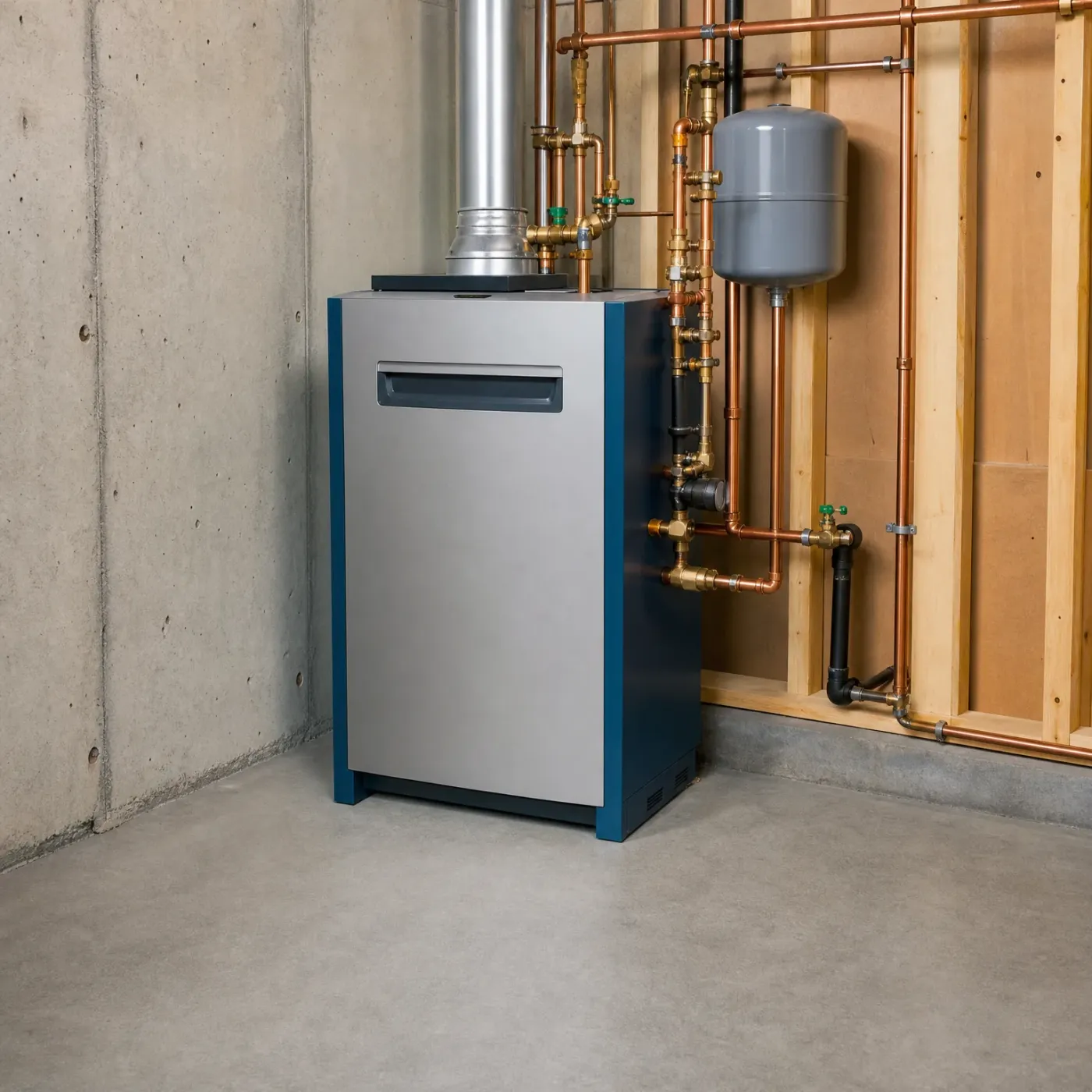
A gray and blue floor-standing boiler in a basement corner, with a metal flue pipe and copper and black piping, valves, and a gray expansion tank mounted on an unfinished wood-framed wall beside a concrete wall.
After you get your boiler installation

33°F

That's the average winter night here. A contractor sizes your boiler to that number, not to a colder climate's heat loss, which keeps output matched to what your house actually asks for.

Hand it over

One contractor, not five

The request goes to a licensed installer local to Nevada who sizes boilers for this climate regularly and knows which failures show up in homes like yours.

Hand it over

Winter nights average 33°F statewide

33°F isn't hard freeze territory. Your boiler here doesn't need to fight the kind of cold that keeps a furnace running nonstop in other states, and sizing it for that would mean paying for output your house never calls on.

NOAA nClimDiv 1991-2020 county normals weighted by homes

Keeping your existing boiler

If your boiler came with the house, nobody sized it for the house you actually have. It was sized for whatever the builder spec'd or whatever fit the mechanical room at the time. It might be close. It might be two sizes off in either direction. You won't know until someone runs the numbers, and until then you're guessing right along with it, paying for cycling patterns that have nothing to do with your rooms, your windows, or a Nevada winter.

Installing one sized to your house

A new boiler gets sized to your square footage, your insulation, your windows, and a Nevada winter, not the one the old unit was guessing at. The contractor runs a heat loss calculation first, so the output matches what your rooms actually lose on a 33°F night instead of what happened to be on hand years ago. You get long, steady cycles instead of short ones, and a mechanical room that isn't quietly working against your house.

A woman with dark hair in a bun reclines on a sofa with her eyes closed, wrapped in a cream fleece blanket, a closed blue hardcover book resting in front of her, with a lit lamp and a vase of dried flowers in the background.
A smiling bearded man in a navy sweater sits at a candlelit dinner table with a glass of red wine, a bowl of salad, and plates of food in the foreground.

Getting your boiler size right

  • A heat loss calculation, not square footage alone, is what sets the right boiler size for your house.
  • Nevada's mild winter nights mean most houses here need less boiler output than the sizing charts assume.
  • An oversized boiler short cycles on mild nights, and that wears on the igniter faster than steady runtime.
  • An undersized boiler runs long enough on the coldest nights that it struggles to hold temperature at all.
  • A local installer who sizes boilers for Nevada winters knows how far off a builder-spec'd system usually runs.
  • Your request goes to one licensed local contractor, so you're not fielding calls from several companies at once.

The size question comes down to one thing: a heat loss calculation done for your house, not a number pulled off a chart. Nevada's mild winter nights mean that calculation almost always lands lower than a generic estimate would. Go bigger than that and you get short cycling, which wears on the igniter over time. Go smaller and the boiler runs flat out on the coldest nights and still falls short. Either way, you feel it in the rooms before you understand why.

A local installer sees this pattern every winter, not just once. They know what a builder-spec'd boiler usually gets wrong, because they've opened up enough mechanical rooms in houses like yours to recognize the same mismatch again and again. That's not a guess about your equipment specifically. It's what the work looks like season after season in a place where 33°F nights are normal and a system built for a harder climate is doing more than your house will ever need.

Send the request and it goes to one contractor, licensed and local, not a batch of companies competing for the job. You get someone who sizes boilers for this climate as a matter of course, looking at your actual house, your actual rooms, and your actual winter, and tells you what it needs. That's the whole answer to the question you came here with. The rest is the work of getting the number right for your address.

At dusk, a dark board-and-batten house with a standing-seam metal roof and lit entry walkway of stone pavers, with two large outdoor heat pump units on a stone-walled pad at right and trees and hills in the background.

Boiler Installation

Done looking for a boiler pro

Step 1 of 3: Equipment
  • A dimly lit living room corner with a beige upholstered sofa holding a dark green cushion and a chunky knit throw, beside a wooden sideboard with a lit ceramic table lamp, a small potted plant, and a wooden bowl, with a framed artwork on the wall and a mug on a book in the foreground.
    • A local installer who puts in boilers gets your project.
    • Get in touch with a local installer about a new boiler.
  • A round wooden coffee table holding a round stone vase of green foliage, a lit candle in a glass container, and a small dark bowl, with a beige sofa, cushions and knit throw behind and a window at left.
    • Once you send the form, finding a pro is off your list.
    • After you send the request, you're done searching.
  • Sunlit living room with a wooden coffee table holding a ceramic vase of leafy branches and a carved wooden tray with two stacked books, in front of a beige sofa with tan and green cushions and a potted plant near a window.
    • Skip the round of in-home estimates for a new boiler.
    • Describe the project once instead of to every installer.
  • Interior corner with a lit ceramic table lamp and wooden bowl on a wood sideboard, a framed picture and branch-filled vase behind, a knit throw over an upholstered chair, and a lit candle in a glass holder, stoneware mug and round planter of green foliage on a wooden table in the foreground.
    • Your request stays with one local pro.
    • Your request goes to one pro, not a list of companies.