NV Boiler Service
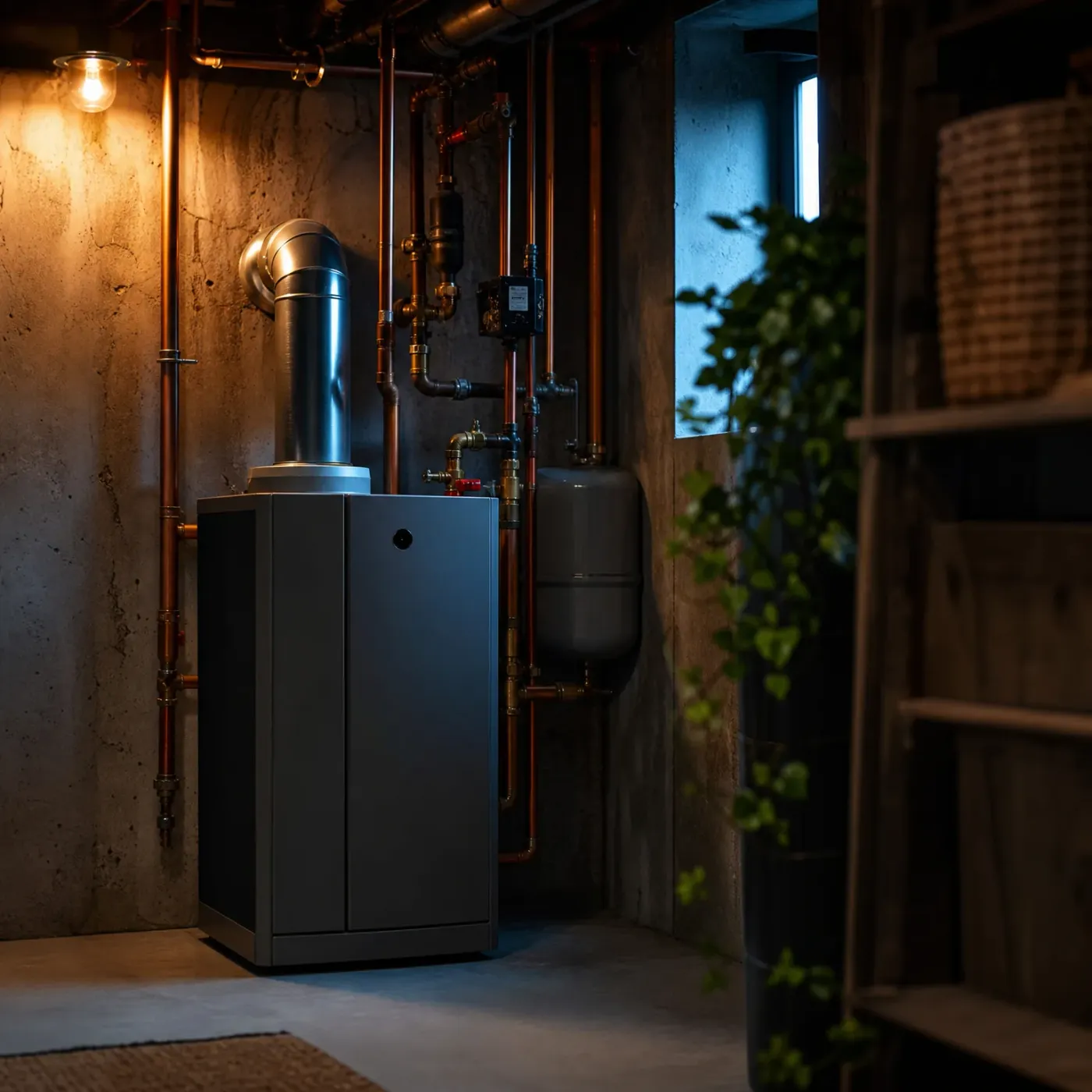
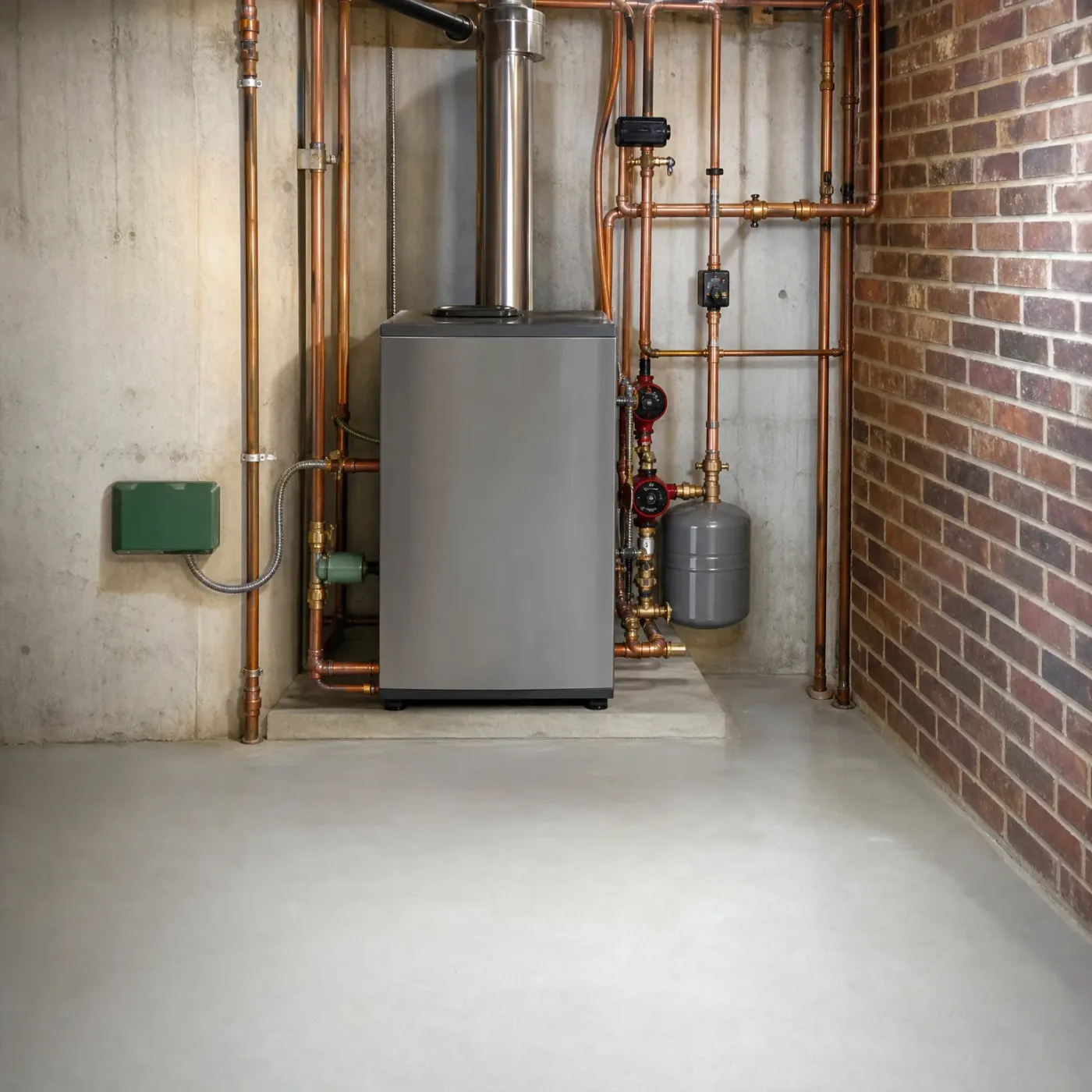
A dark grey floor-standing boiler with a metal flue stands against a concrete basement wall, surrounded by copper pipework, valves and a wall-mounted expansion tank, with ivy and a shelving unit at right.

Skip calling around

Why your boiler is leaking water in Nevada

Water around the base of your boiler means something inside is letting go, and in a gas-heat Nevada home that's not something to leave for later. Below is what usually causes it and how a boiler gets fixed. No need to search out a contractor, call several, and repeat the same story to each one. This page connects you to one licensed local plumber who works on boilers all season and can tell you what's leaking before they even open the panel.

Describe it once

A leak at the boiler usually comes from one of a few places. The pressure relief valve lets water out when pressure inside builds too high, often because the expansion tank has failed or the system was overfilled. A cracked heat exchanger will weep water slowly, usually from age. Loose fittings or a worn circulator pump seal can drip at the joints. Corrosion inside the tank, if yours is a storage-style unit, can open a pinhole that gets worse over time. Nevada's dry summers don't cause this, since your boiler runs for the heating months, but once a leak starts it won't stop on its own, and running a boiler with a bad relief valve or a cracked exchanger risks bigger damage to the unit and to the floor and walls around it. The source matters because some of these are a quick part swap and others mean the boiler is near the end of its life. That's worth having someone look at before you decide what to do next.

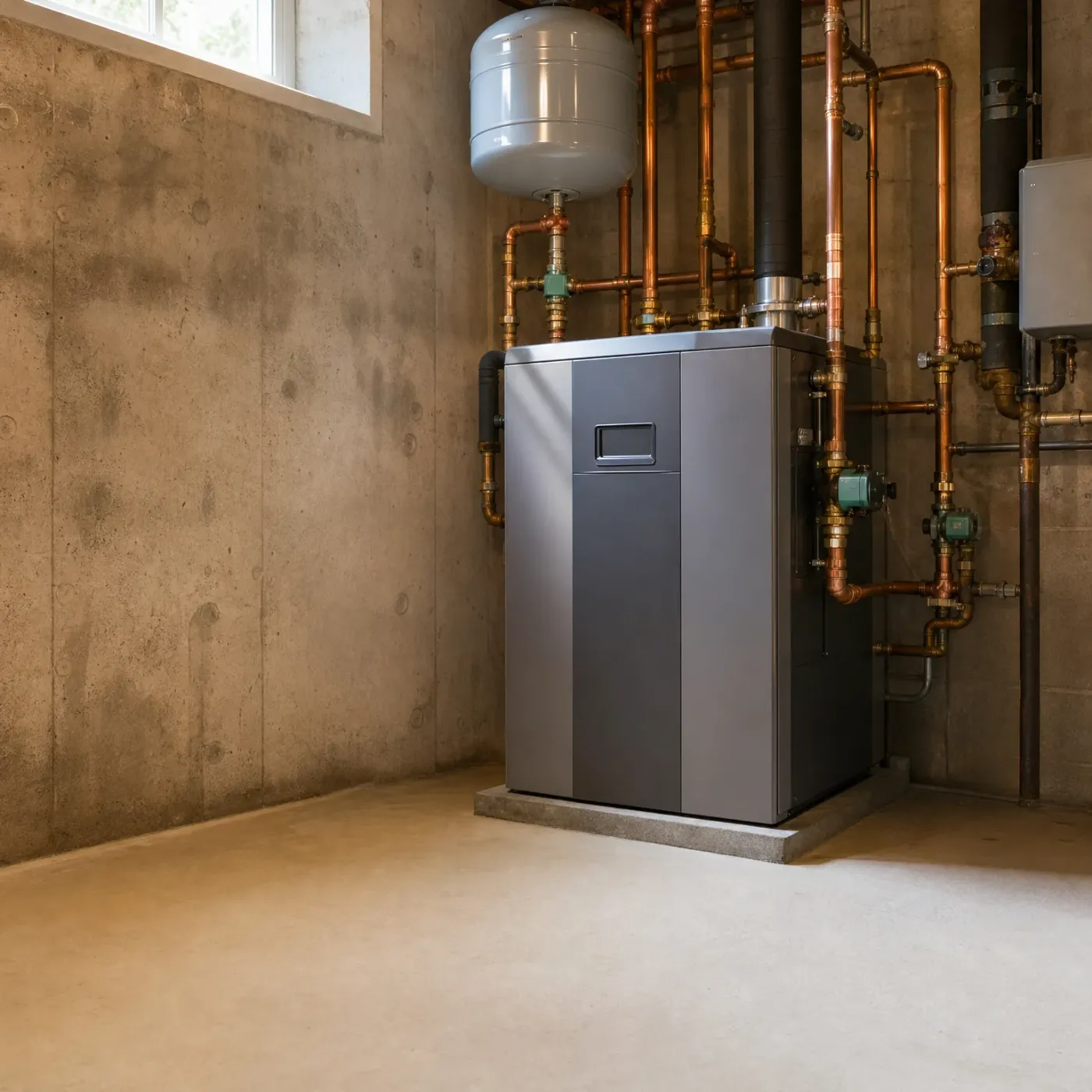
A gray boiler unit on a concrete pad in a basement corner, connected to copper piping, circulator pumps, and a ceiling-mounted expansion tank against bare concrete walls.
A boiler that's holding pressure right, with dry, tight fittings, can run for years with no drips to track down.
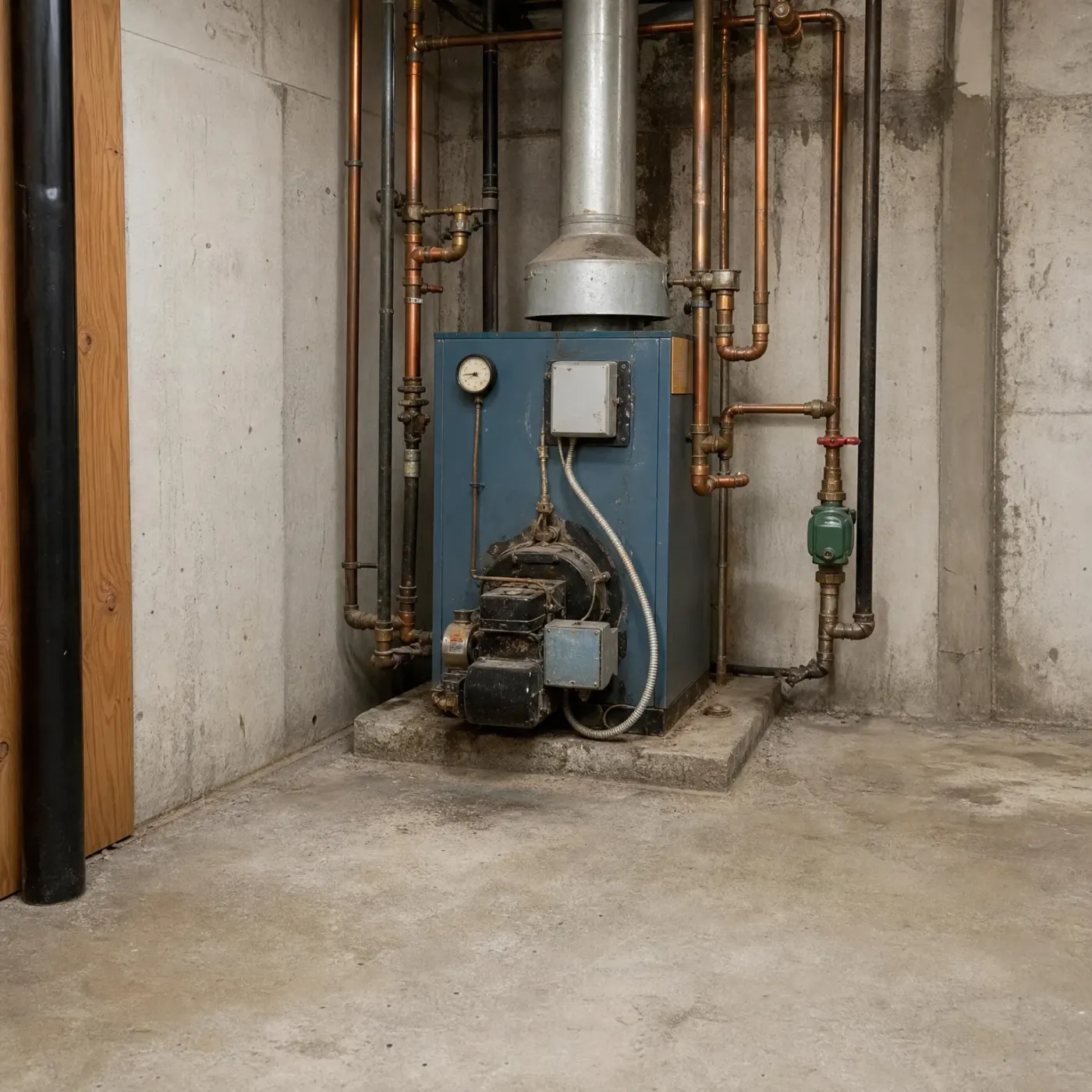
A blue oil-fired boiler with a pressure gauge, burner unit and metal flue sits on a concrete pad in a basement corner, surrounded by copper and black pipes against bare concrete walls.
Once a gauge or a pipe joint starts weeping, it tells you something inside is already wearing out.

Most boiler leaks trace back to one of a handful of spots, and each one tells a different story. The relief valve near the top of the tank is designed to open once pressure passes around 30 psi, so water there is the system doing its job, not failing at it. If the gauge sits above that mark on its own, the cause is usually upstream of the valve, an expansion tank that's lost its charge or a fill valve letting in too much water. A damp pipe joint or fitting is a worn seal or gasket, and it needs replacing rather than just a wrench. Water right at the pump housing points to the circulator's own seal giving out, separate from anything at the tank. A leak from the bottom of the tank is the one to take seriously, since that's often a cracked heat exchanger, and at that point the tank itself is what needs replacing. Because water travels along a pipe before it drips, where you find it isn't always where it started.

Where the water is coming from

  • The pressure relief valve sits near the top of the tank and opens on its own once pressure inside passes roughly 30 psi.
  • A gauge reading above 30 psi points to a failed expansion tank or a fill valve that's letting in more water than the system needs.
  • Water at a pipe joint or fitting usually means the seal or gasket there has worn through and needs replacing, not just tightening.
  • A leak from the bottom of the tank itself, rather than a valve or joint, often means the heat exchanger has cracked and the tank needs replacing.
  • The circulator pump has its own seal, and once that seal wears out, water shows up at the pump housing instead of at a valve.
  • Low-lying leaks are easy to miss at first because the water can run along a pipe before it drips somewhere visible.
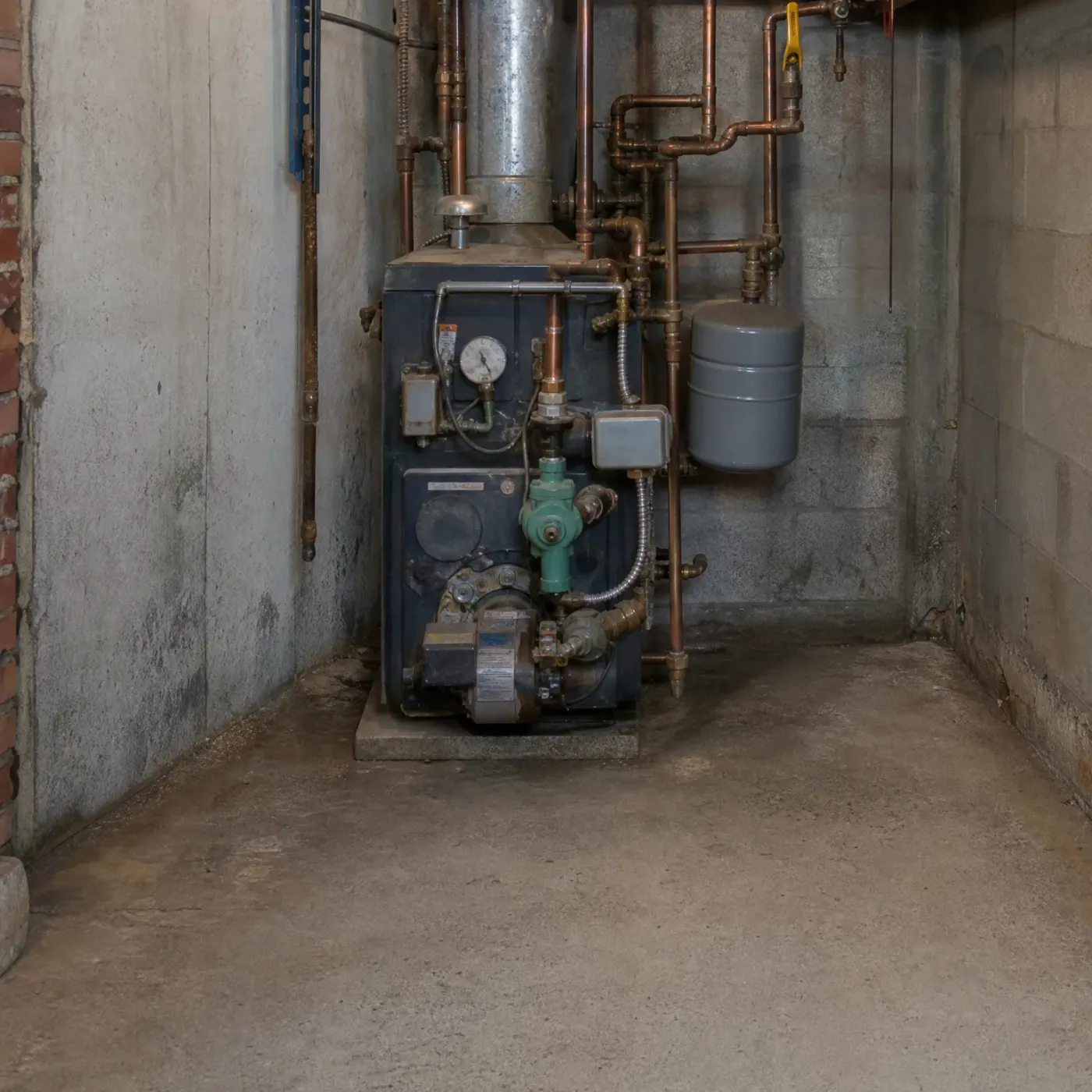
A dark cast-iron boiler with copper piping, pressure gauge, and a gray expansion tank sits on a concrete pad in a basement corner with concrete block and brick walls.
Before you get your boiler repair
A gray boiler on a concrete pad in a basement, connected to copper piping, valves, pumps and a gray expansion tank, with a concrete wall on the left and a brick wall on the right.
After you get your boiler repair

Why dry fittings still fail

A boiler fitting doesn't have to be dripping to be a problem. Threads and gaskets work all day, every day the system is running, through the heat of the water and the strain of it expanding as it warms. Over years that cycle works a fitting loose or dries out a gasket until it can't hold the line anymore. A dry joint today doesn't mean it stays that way. It means the seal hasn't given out yet. A contractor checking a boiler for leaks looks at these spots even when nothing is visibly wet, because that's where the next leak usually starts.


What the water tells you

Where the water shows up points to what's failing. Water pooling under the tank itself often means the heat exchanger inside has cracked, since that's the lowest point it can reach. Water at a pipe joint or valve is more likely a seal or gasket that's given out, not the tank. Clean water that evaporates and leaves a faint ring is different from water that keeps collecting and doesn't dry up. A contractor reads these details before opening anything up, because they narrow down what's failing before a single part gets touched.

Winter nights average 33°F statewide

Nevada's winter nights average 33°F statewide, which keeps your boiler cycling most nights from December through February. That steady run time puts hours on the pressure relief valve and every fitting in the system, which is why a leak tends to show up partway through winter rather than on the first cold night.

NOAA nClimDiv 1991-2020 county normals weighted by homes

A man with grey hair and stubble in a dark sweater sits on a grey sofa indoors, looking off to the side, with a potted plant and a sunlit window behind him.
A man with gray hair, a beard and glasses, wearing a dark green sweater, sits on a gray sofa in a sunlit living room with a potted plant, table lamp and wooden sideboard behind him.
A middle-aged man with graying hair and a short beard sits on a blue sofa in a living room, looking toward a window, with a bookshelf, lamp and framed picture in the background.
A man with graying curly hair and a dark green sweater sits on a gray sofa in a sunlit living room, looking off to the side, with a framed picture, shelving, an armchair and a window with sheer curtains behind him.

Describe it once

Your request goes to one pro, not a list of companies.

There's no charge for the request.

What a leak puts at risk in your house

Water finding its way out of your boiler doesn't stay at the boiler. It runs down to the floor underneath, and if that floor is a finished one, you're looking at warped boards or stained concrete before long. If the boiler sits in a closet or utility room, the drywall around it will take on moisture too, and that's how you end up with a damp smell that doesn't go away on its own. The longer a leak runs, the more it corrodes the metal it touches, including fittings and connections that were fine a year ago. None of that reverses itself. It only gets worse while the source goes unaddressed.

What it costs you in the meantime

A boiler losing water through a leak is losing pressure too, and a system that keeps dropping below where it needs to run will shut itself down or short cycle trying to compensate. That means a fill valve somewhere is topping it back off automatically, and that's water and the gas to reheat it, both paid for and both wasted. With power cheap here, the bigger hit is the water and the slow damage, not the electric bill. A boiler running low and refilling constantly also wears the parts that regulate pressure faster than one holding steady ever would.

A woman with shoulder-length brown hair wearing a beige knit cardigan sits in a gray upholstered armchair near a window, looking off to the side with a slight smile, with bookshelves blurred in the background.
A woman with her hair in a bun holds a sleeping young child against her chest, both wrapped in a textured beige knit blanket on a sofa in a dimly lit room with a lamp, framed picture, and bookshelf behind them.

Keep running it

The leak doesn't stop on its own. Water keeps finding the same weak spot, pressure stays wherever it's drifted to, and the parts around the leak keep corroding until one of them fails outright.

Find a local pro

Get it repaired

A local contractor who works on boilers all winter checks the valve, the tank, and every fitting, finds the one actually failing, and fixes it instead of guessing.

Find a local pro

What you're probably seeing around your boiler right now

Look for a damp spot on the floor under the tank, or a puddle that's already dried to a white, crusty ring. You might see drips on the pipe fittings themselves, or rust starting to form where water's been sitting on metal. Sometimes it's not water you notice first but a musty smell near the utility closet, or a hissing sound when the system is running. If the leak's been going a while, check for soft or discolored flooring nearby, since standing water works into wood and drywall fast and that damage doesn't stop once it starts.

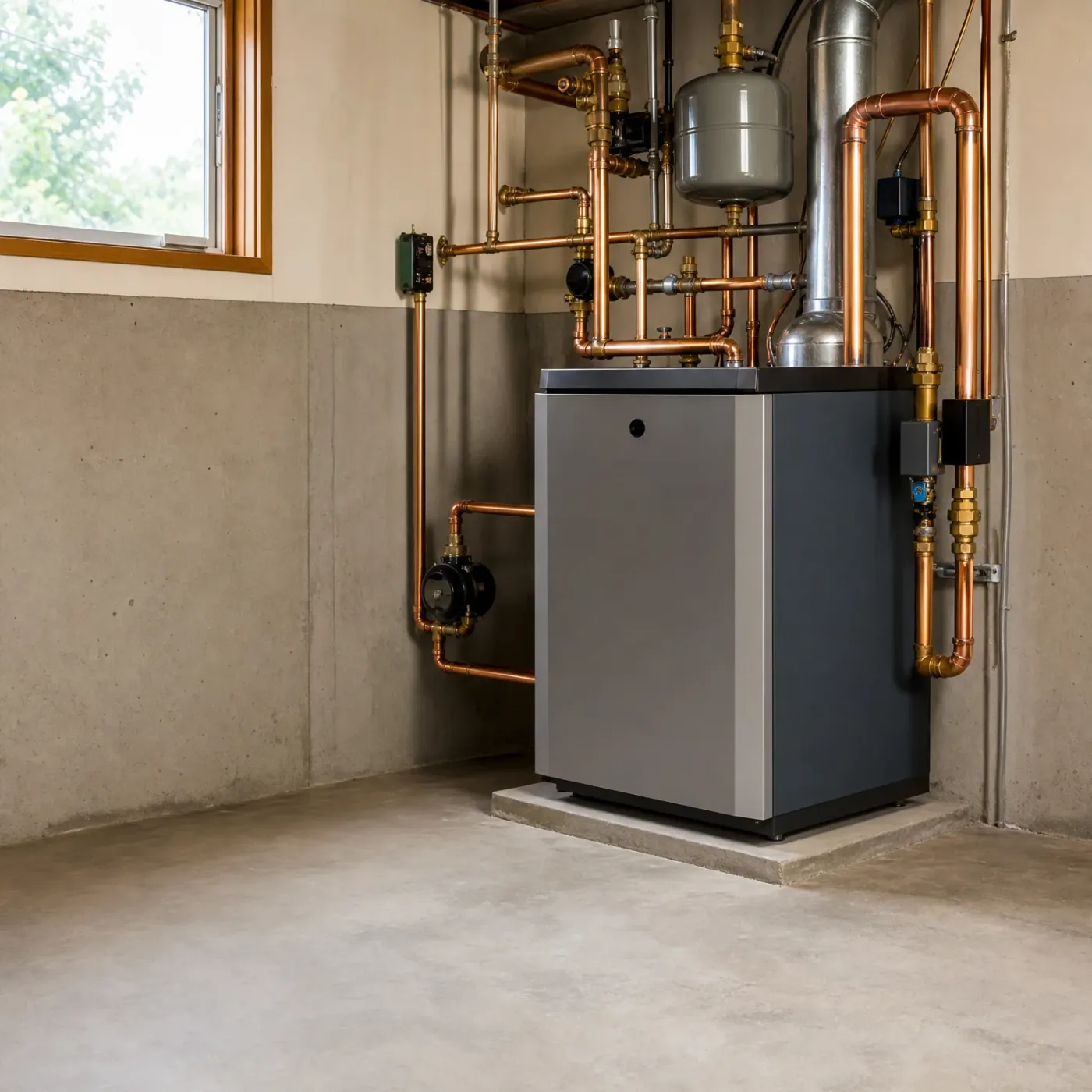
A gray floor-standing boiler on a concrete pad in a basement corner, connected to copper piping, brass valves, a circulator pump, an expansion tank, and a metal flue, with a window at upper left.

Boiler running right

Copper lines run tight to the pump, the expansion tank, and the flue vent, with every fitting dry. Pressure holds steady and the relief valve stays shut, the way it's built to work. A system like this can run for years without a drip to chase down.

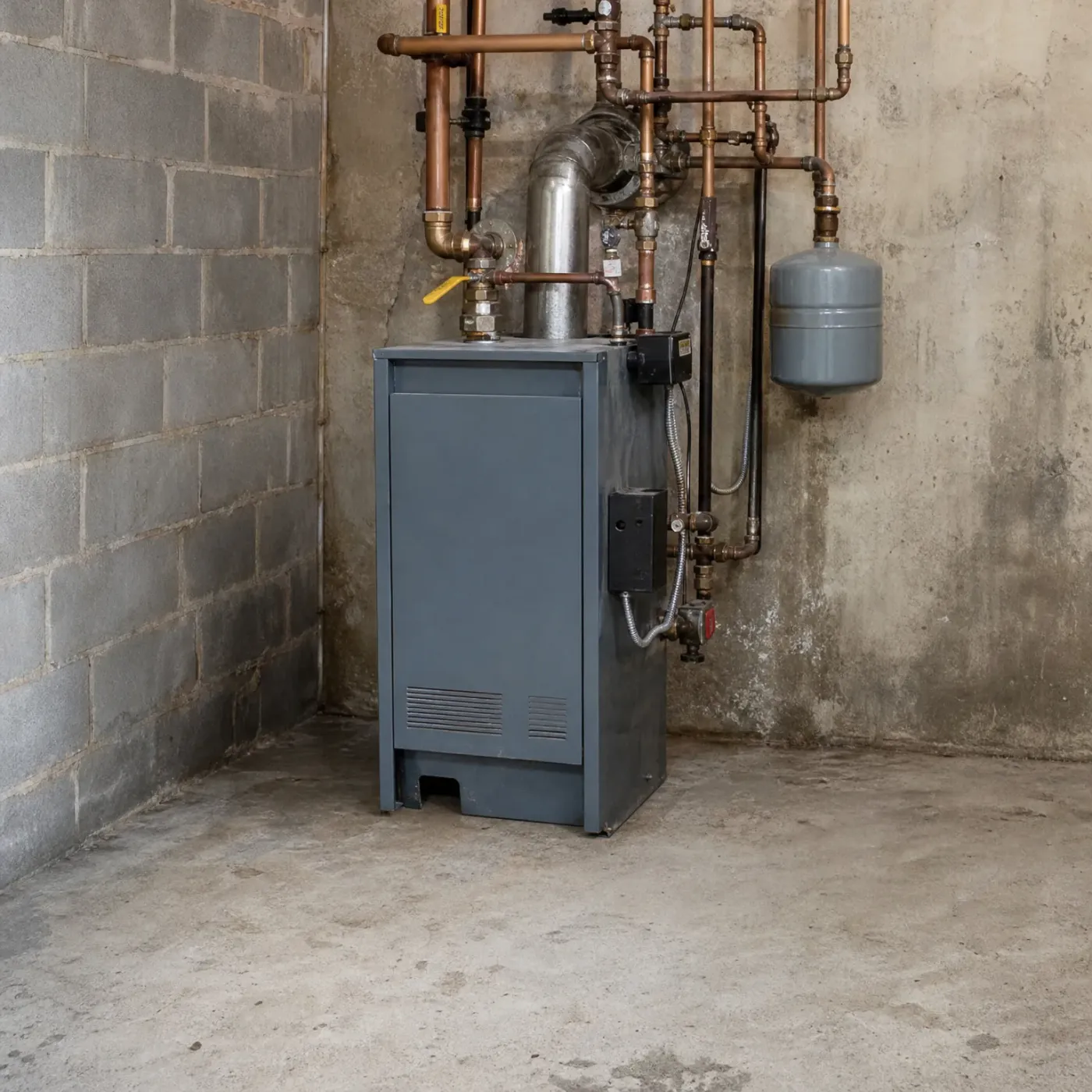
A gray floor-standing boiler in a basement corner with copper and black piping above it, a flue vent, and a gray expansion tank mounted on the concrete wall beside a concrete block wall.

Boiler in trouble

The piping along the wall and the expansion tank beside it are where leaks usually start to show. A damp patch at the base of the unit or rust forming on a fitting means something is already letting go. Left alone, the spot that's weeping now only gets worse.

Fix It Yourself or Call It In

Patch it yourself

  • Tightening a fitting or wrapping it with tape stops the drip for a while, but the threads underneath are already worn and the leak comes back.
  • A store-bought relief valve isn't matched to your system's pressure, so it can fail to open when it should or open too soon.
  • Without a pressure test afterward, you won't know if the real cause was the expansion tank, the fill valve, or the valve itself.
  • Working on a boiler under pressure without draining it first can mean scalding water coming out faster than expected.
  • Any part swapped in without checking the rest of the system just moves the failure point somewhere else.

Have it repaired

  • A contractor who services boilers in Nevada every winter knows which part usually gives out first and checks that one before the rest.
  • One licensed, local contractor takes the call, so you're not fielding quotes from several companies for the same job.
  • The pressure gets tested after the repair, so you know the fix addressed the cause and not just the spot where water showed up.
  • The expansion tank, fill valve, and relief valve get checked together, since a problem in one usually shows up as a leak somewhere else.
  • The fitting or valve gets replaced with the right part for your system, not a general one pulled off a shelf.
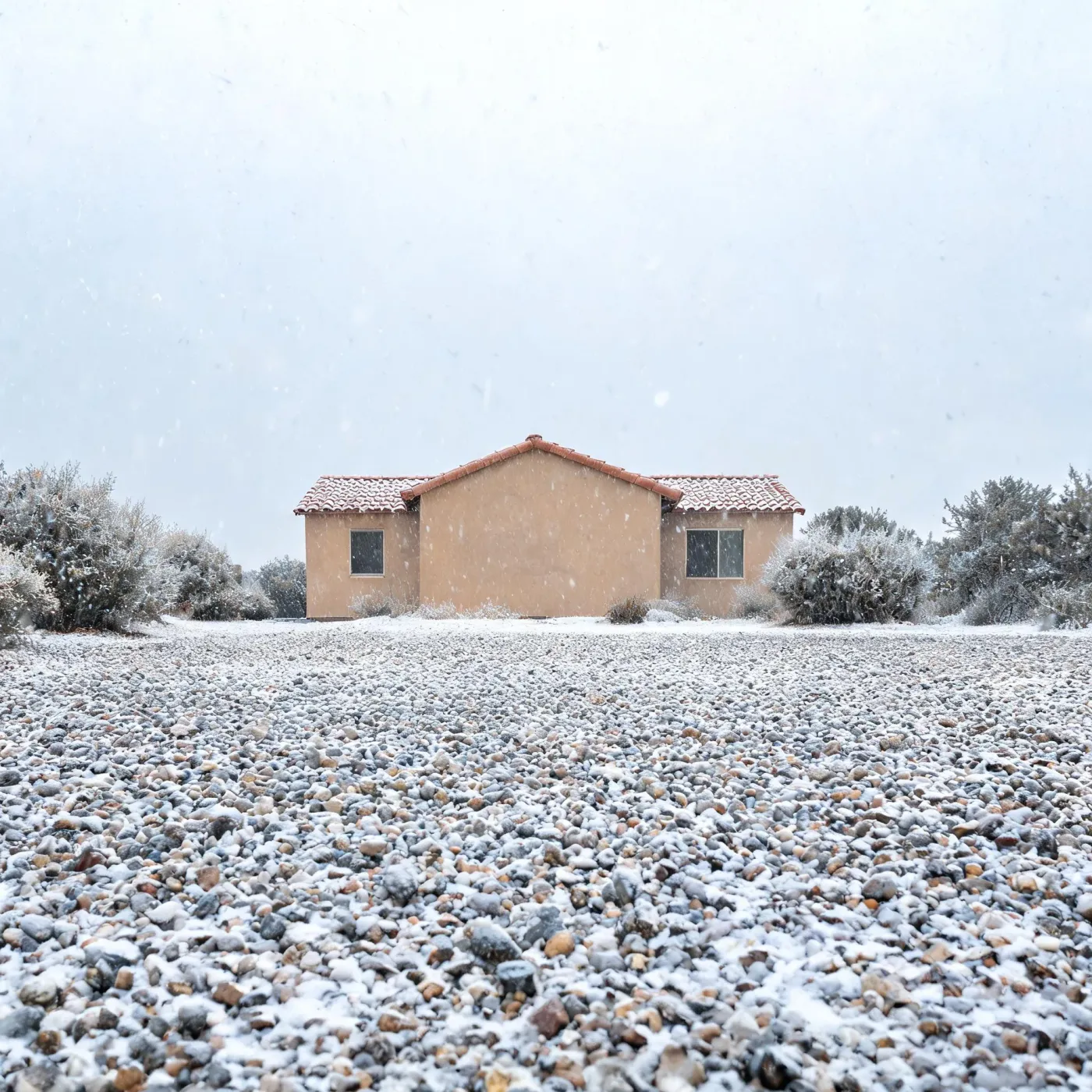
A single-story tan stucco house with a red tile roof stands behind a wide gravel yard dusted with snow, flanked by low shrubs, under a pale overcast sky with falling snowflakes.

Winter nights across Nevada average 33°F statewide, per NOAA. That's cold enough to keep your boiler firing on and off most of the night, every night, from December through February. Each start sends cold water back through the system and brings it back up to pressure, and that cycle is what works a weak gasket or a tired relief valve loose. If you've noticed a drip only showed up once the nights turned cold, this is why. The leak was likely there before, just not under enough pressure yet to show itself.

NOAA nClimDiv 1991-2020 county normals weighted by homes

A closed laptop and a cream mug of coffee on a coaster sit on a dark wooden table, with a potted plant at left and a kitchen counter, tiled backsplash and shelf of ceramics in the background.

A leak tells you something inside has already failed

Water at the base of your boiler is coming from somewhere specific: the relief valve, the expansion tank, a fitting worn loose, or the heat exchanger itself. Whichever it is, it won't close up on its own, and the longer it runs the more it costs you in rust, ruined flooring, or a cracked exchanger that can't be patched. A licensed contractor can trace it to the actual part and fix that part.

Finding that contractor is usually its own chore, pulling up listings, calling a few, describing the puddle and the pressure gauge reading each time, then weighing quotes that aren't quite comparing the same job. Here you skip that. You're matched with one local contractor who works on boilers all winter in homes that heat the same way yours does, and who already knows what tends to go first in a system like it. No extra calls, no repeating yourself, no sorting through competing bids.

A living room corner with a beige upholstered armchair holding navy and striped cushions, a small round wooden side table with a carved bowl and a potted green plant, a framed landscape picture on a pale wall, built-in shelving, and a curtained window.
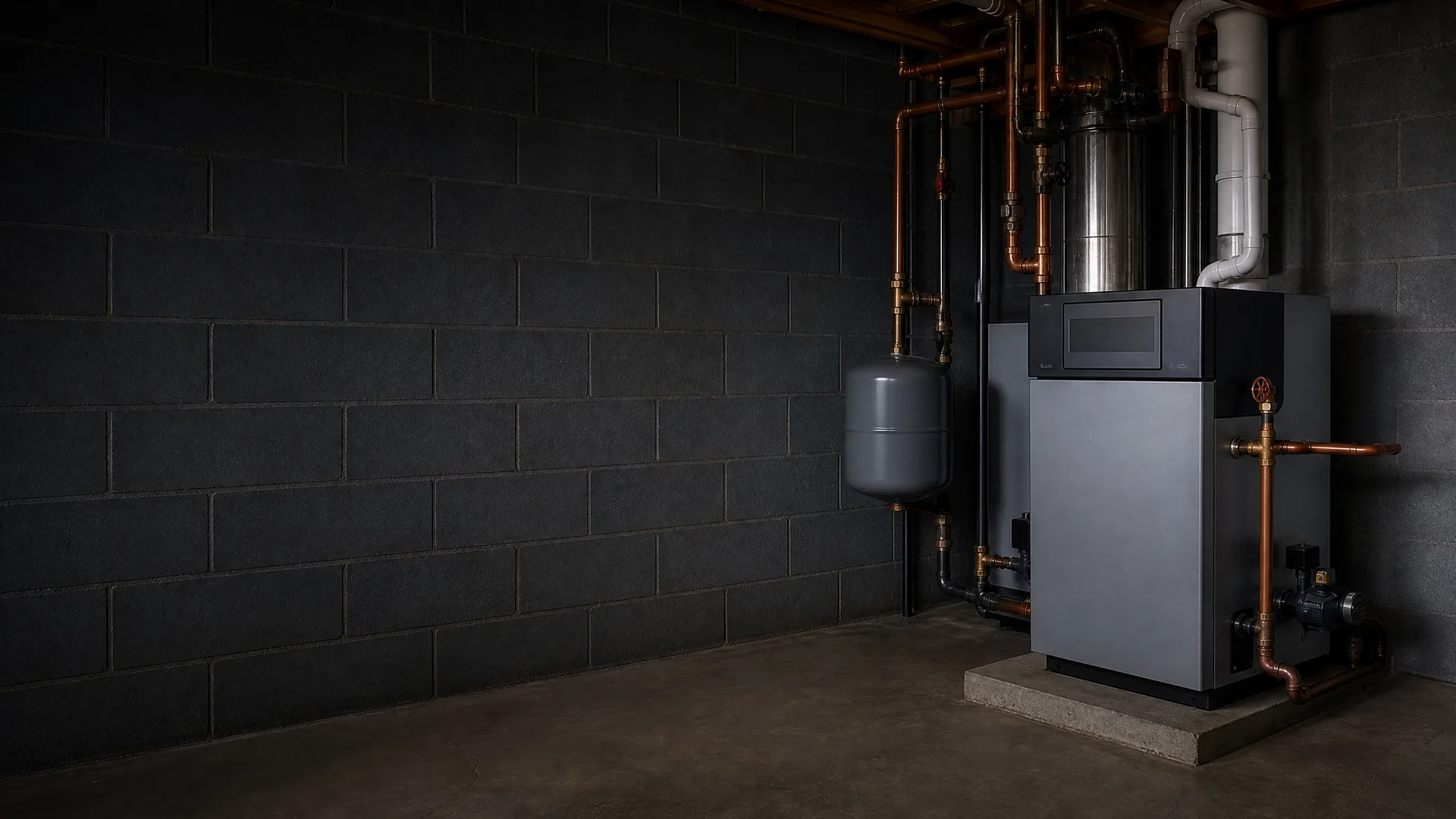
A gray boiler unit with a control panel sits on a concrete pad in a basement room with dark concrete block walls, connected to copper and metal piping, a gray expansion tank, and an insulated flue.

One form, no calling around

Only one pro gets your request, so you hear from one company.

Step 1 of 3: Equipment