
Why your boiler is losing pressure in Nevada
A boiler loses pressure because water is escaping somewhere, either as a slow leak in the system or as water let out through the pressure relief valve when it gets too hot. In most Nevada homes a boiler runs on dry, hard water, and over time minerals from that water can build up around valve seats and pipe joints, which is one of the more common reasons a seal starts to weep. A dropping pressure gauge can also point to a failing expansion tank, a loose bleed valve on a radiator, or a crack somewhere in the pipework you can't see. If the pressure keeps falling, the boiler will eventually lock out or run poorly, and in winter that means the heat in your home becomes unreliable right when you need it most. Finding where the water is going matters more than topping off the pressure, since refilling it without finding the leak just means doing it again in a few weeks.


Slow Leak or Valve Venting
A Slow Leak
- Pressure drops a little every day or two instead of all at once, since the water is escaping gradually.
- Look for a damp spot near a valve, a pipe joint, or where the boiler sits on the floor.
- Hard water here leaves mineral deposits right where a fitting is weeping, so a crusty white spot is often the tell.
- You may need to add water every few weeks just to keep the gauge in range.
- A pinhole leak in a pipe can stay hidden behind a wall or under the floor for months.
- The expansion tank can fail internally and let water out without any visible puddle.
The Relief Valve Venting
- Pressure builds too high, and the valve opens on purpose to protect the system from damage.
- You will usually find water around the valve's discharge pipe rather than spread across the floor.
- This points to the system overheating or overfilling rather than a leak somewhere else.
- A faulty expansion tank is a common reason the valve keeps opening even though nothing is leaking.
- If the valve lets go repeatedly, it can wear out and start dripping on its own afterward.
- Since gas heats most homes here, a boiler that runs hot through a long winter puts real strain on that valve.
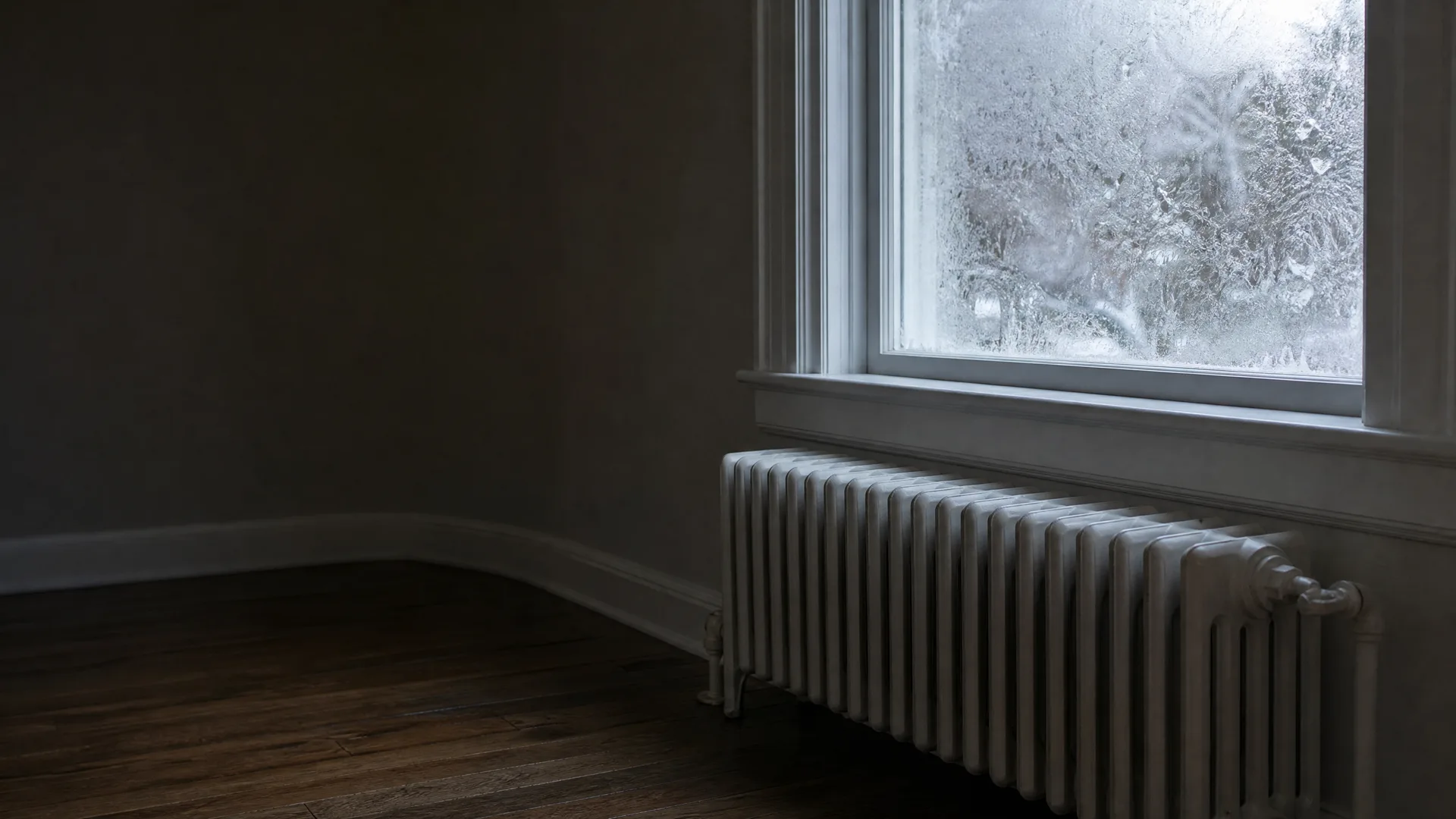
You come downstairs before the heat has caught up with the house. It's January, still dark outside, and the living room holds the cold from overnight. The radiator under the window hasn't put out any warmth and the glass above it has iced over on the inside, a thin white film across the lower pane. You put a hand on the radiator and it's barely warm at the top, cold at the bottom. Outside, the desert air is dry and the cold came on fast overnight, the way it does here. You check the boiler on your way to make coffee. The pressure gauge sits low, under where it should be.
How do I know if it's the pressure relief valve letting water out?
You found a damp spot or a small puddle somewhere near the boiler, and you're trying to work out if the pressure relief valve is the one letting water out, or if it's something else entirely. Knowing which part is responsible changes what gets fixed, so you want to look in the right place before you decide the valve is the problem.
Check the discharge pipe running from the valve down toward the floor
The pressure relief valve has a small pipe attached to it that carries water down and away from the boiler, usually ending a few inches above the floor. If that valve is letting go, you'll find water or mineral staining right at the end of that pipe, not somewhere else on the system. A valve that opens on its own is usually responding to pressure that's climbing too high rather than failing on its own. With Nevada's hard water, minerals can also keep a valve from seating back down fully once it opens, so it keeps weeping even after pressure settles. A contractor can tell from that staining whether the valve itself needs replacing or whether something upstream is pushing pressure higher than it should go.




A local pro for your boiler repair

Once you send the form, finding a pro is off your list.
Sending the form costs nothing.

Winter nights average 33°F statewide, cold enough that your boiler is firing through the night to keep the house warm while you sleep. Each time it heats up and cools back down, the water inside expands and contracts, and that cycling is what pushes pressure past the relief valve if there's already a weak spot in the system. A boiler running steady through a mild afternoon rarely shows a problem. One running hard through a cold night is where you'll find the puddle by morning. If your pressure keeps dropping and you notice it's worse after the coldest nights, that's the cycling at work, not a coincidence. Source: NOAA climate data.
NOAA nClimDiv 1991-2020 county normals weighted by homes
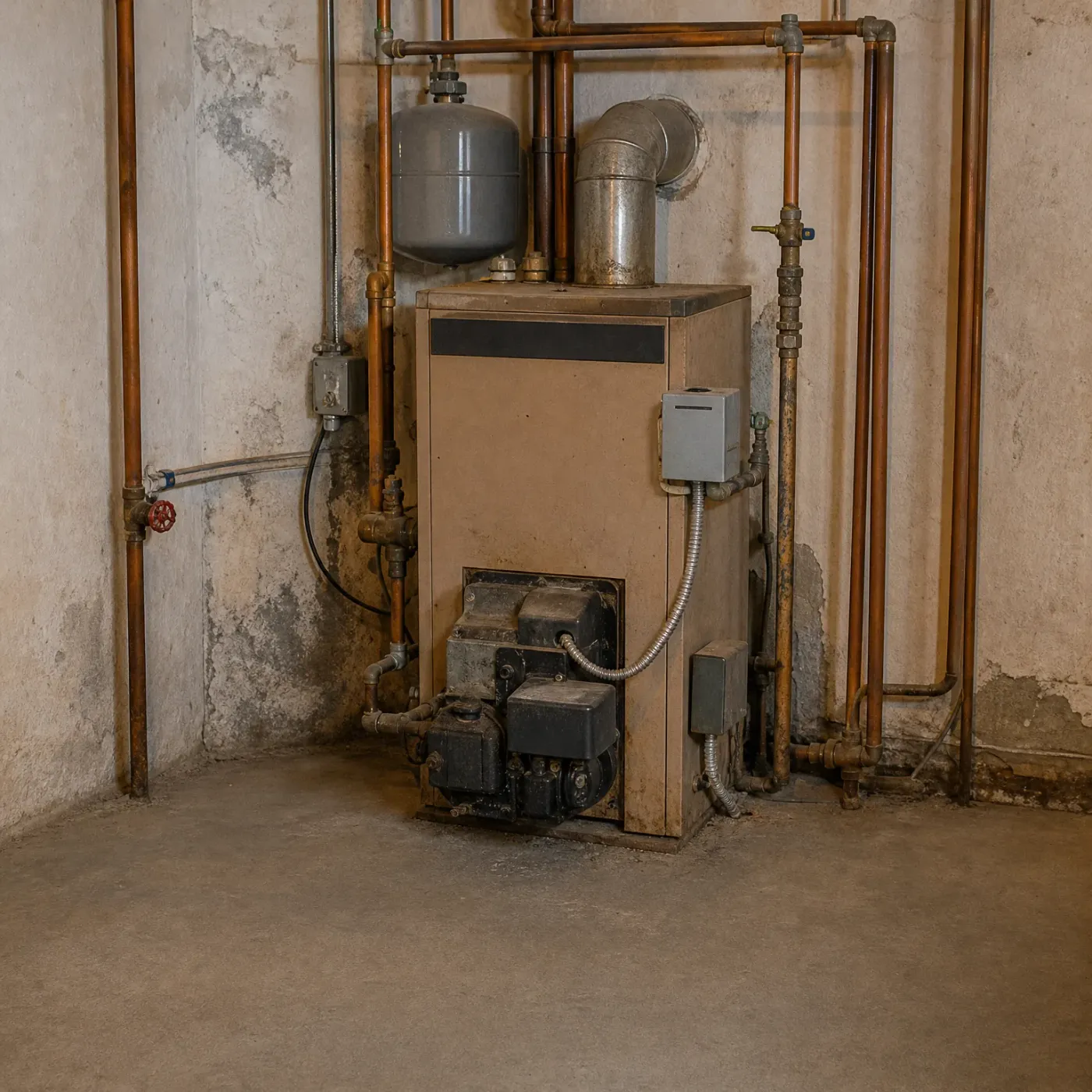
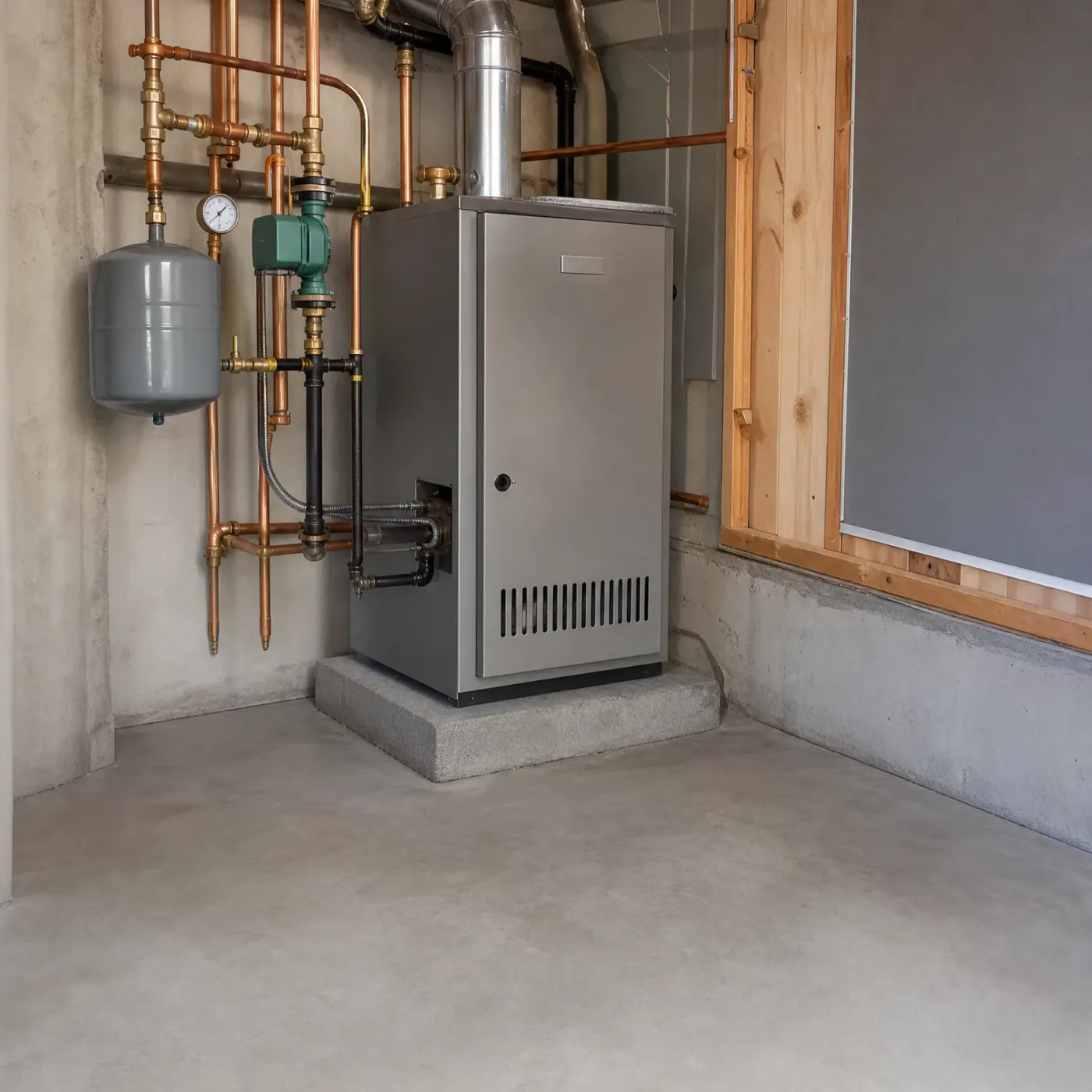

Water leaves the system through a leak or the relief valve
The pressure gauge needle drops below the 12 to 15 psi range
Low water pressure trips the boiler's pressure switch
The boiler shuts down and stops sending heat to the radiators
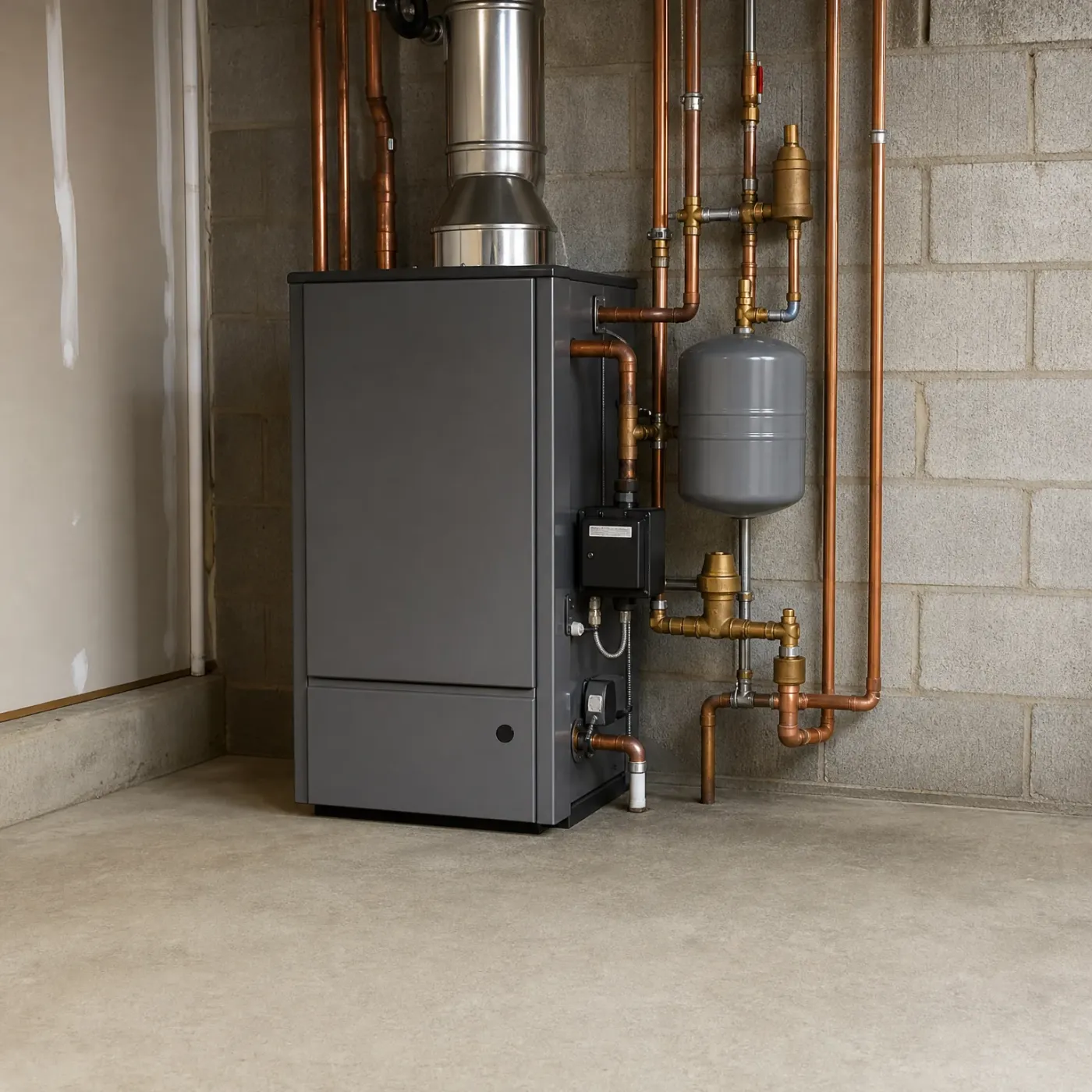
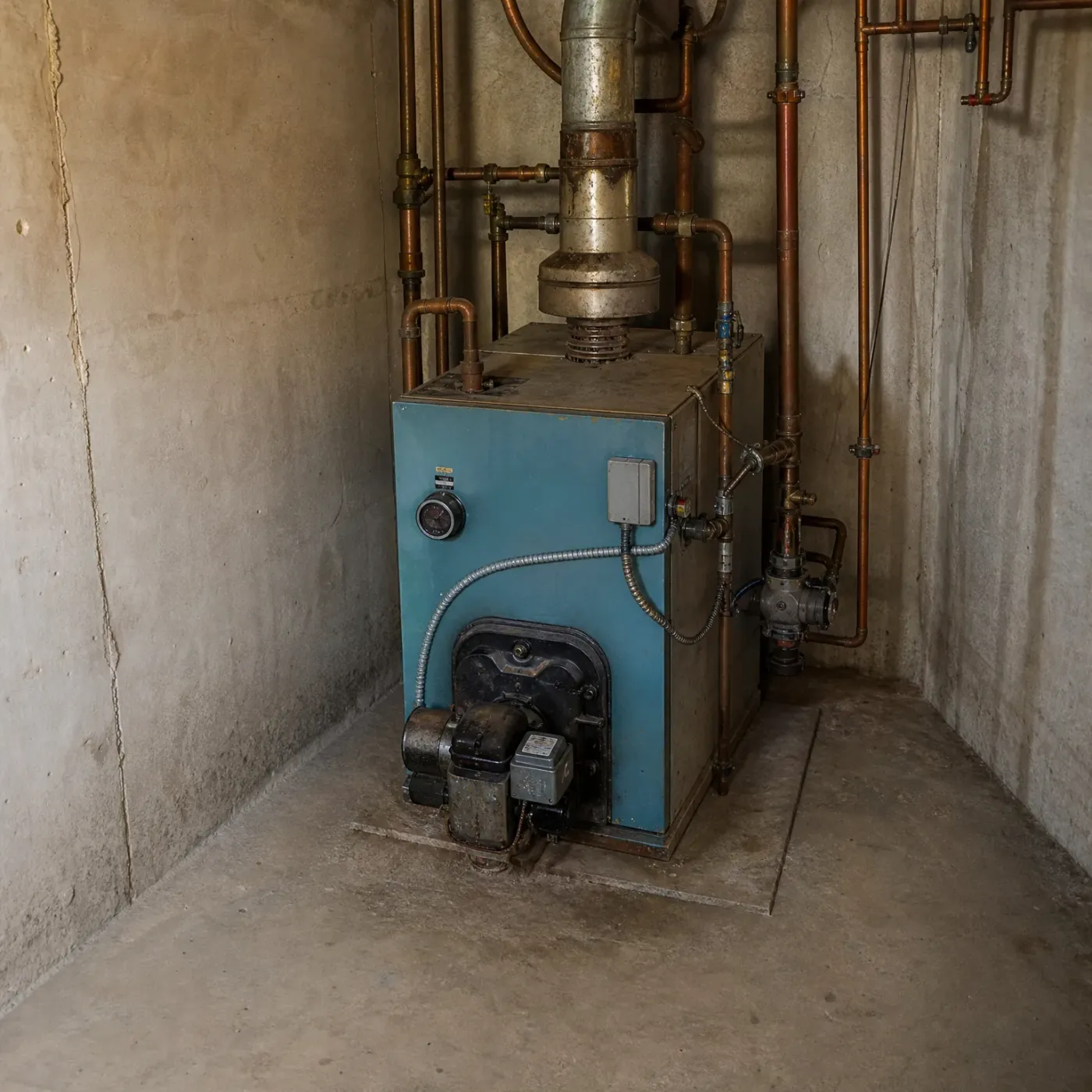
The Feed Valve and Expansion Tank
- The automatic feed valve, called the pressure reducing valve, refills the loop whenever pressure drops below its setpoint.
- A failing feed valve can stick shut and starve the system, or stick open and overfill it past 30 psi.
- The expansion tank holds a cushion of air that absorbs the water's expansion as the boiler heats it.
- If the expansion tank's bladder fails, that cushion is gone and pressure swings harder with every heating cycle.
- A pressure relief valve set to open at 30 psi is doing its job if it's venting water, not malfunctioning.
- Bleeding air from a radiator through its bleed valve lets fresh water in behind it, which is why pressure often dips right after.
Two parts hold your boiler's pressure steady, and when one of them fails, the gauge tells on it. The automatic feed valve sits on the cold water line into the boiler and watches pressure the way a thermostat watches temperature. When pressure drops, it opens and lets city water in until the setpoint is met again, usually somewhere around 12 to 15 psi. That valve can stick in either direction. Stuck shut, it stops refilling the loop and pressure just keeps falling as the system loses water elsewhere. Stuck open, it keeps feeding past where it should stop, and you end up chasing a pressure relief valve that keeps venting at 30 psi because the feed valve won't quit.
The expansion tank works differently. Inside it is a rubber bladder with air on one side and system water on the other. As the boiler heats water, that water expands, and the air cushion gives it somewhere to go without the pressure spiking. If the bladder fails, ruptures or loses its air charge, that cushion disappears. Pressure then swings hard with every heating cycle, climbing fast when the burner fires and dropping fast when it shuts off, instead of holding steady the way it should. A waterlogged expansion tank is one of the more common reasons a boiler's pressure looks fine one hour and wrong the next.
Winter nights average 33°F statewide
At 33°F, your boiler is cycling on and off most of the night rather than firing once and holding steady. Each cycle expands and contracts the water in the loop, and that repeated swing is what works pressure down or past the relief valve over a season.
NOAA nClimDiv 1991-2020 county normals weighted by homes

A boiler holding steady pressure keeps your house warm all winter
Pressure that keeps dropping is water leaving the system somewhere, whether that's a slow leak at a joint or the relief valve opening because the boiler ran too hot. Either way, it's not something that fixes itself. A boiler that can't hold 12 to 15 psi will keep tripping its pressure switch, and the house will keep losing heat at the times you need it least.
A contractor who looks at the system can tell you which one it is and fix the actual cause, not just top off the pressure and leave you to watch it fall again. Once you send the request, you're matched with someone who takes boiler calls in your area, and they reach out to you directly. You won't be the one tracking down who's available or chasing a callback. That part is off your plate, and the house gets back to holding its heat through the night.






Get the right pro for your boiler
After you send the request, you're done searching.
You're not committing to anything by asking.